16%

Carbon, from organic acids

155 ppm

CO₂ equivalent, per mL

10.0 lb/gal

Concentrate weight

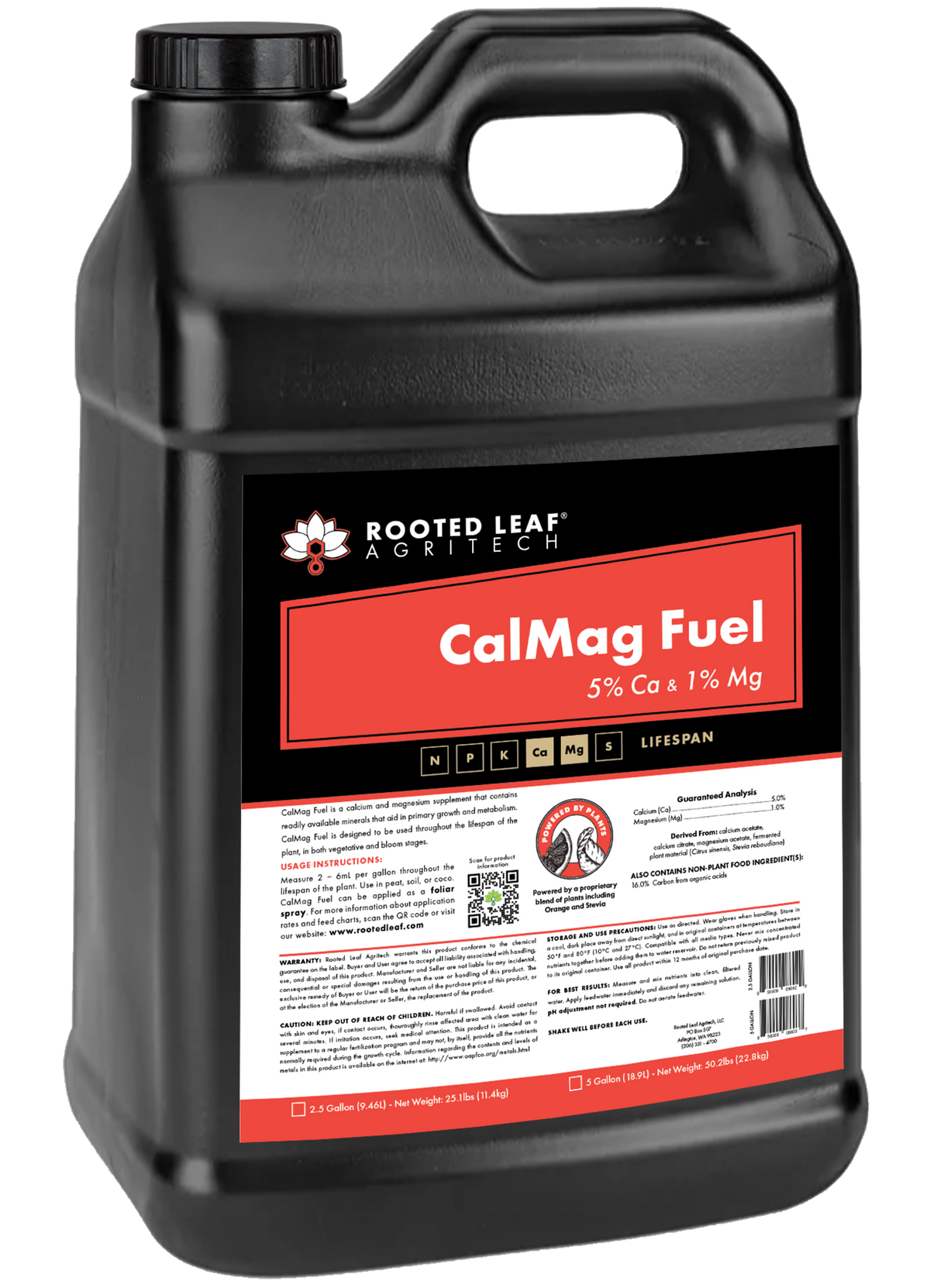
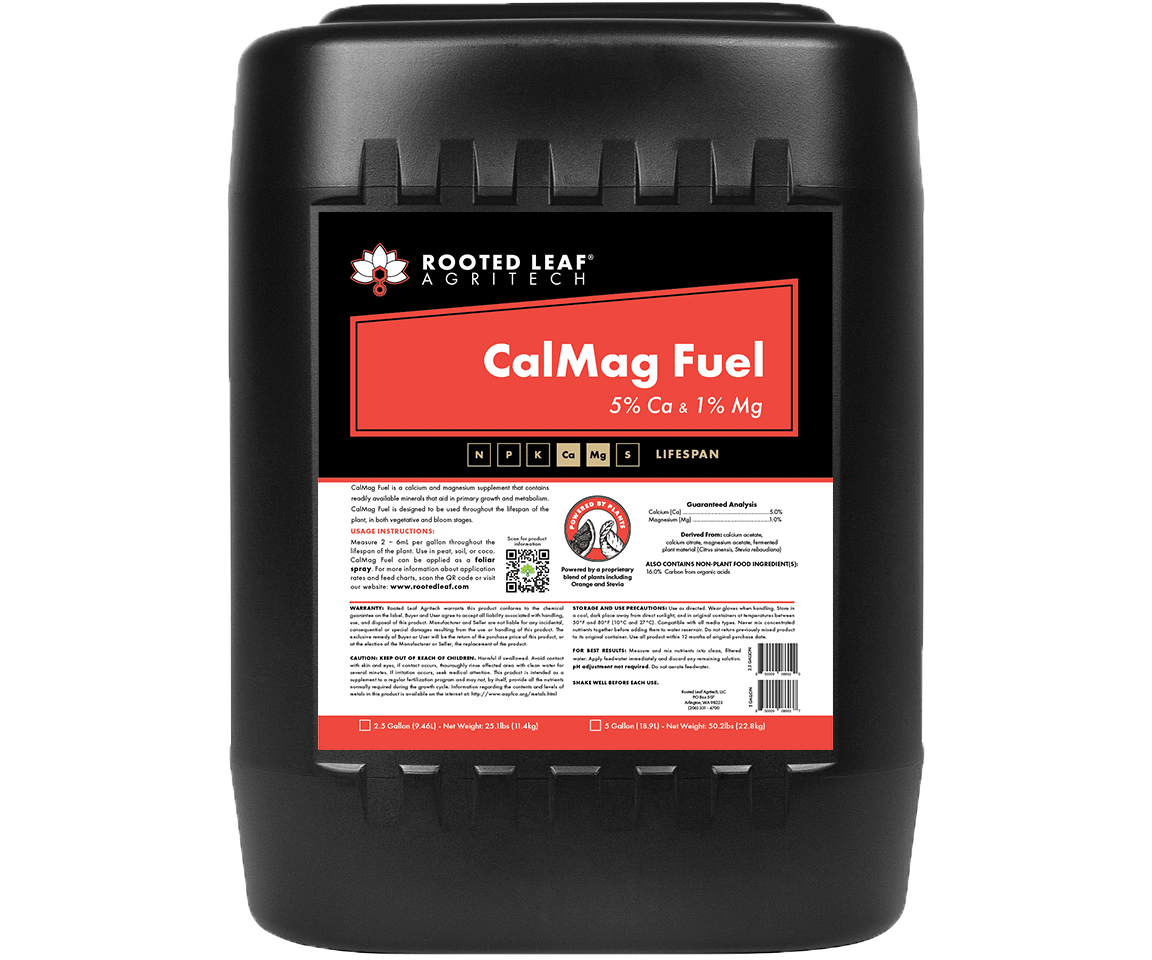
Guaranteed Analysis

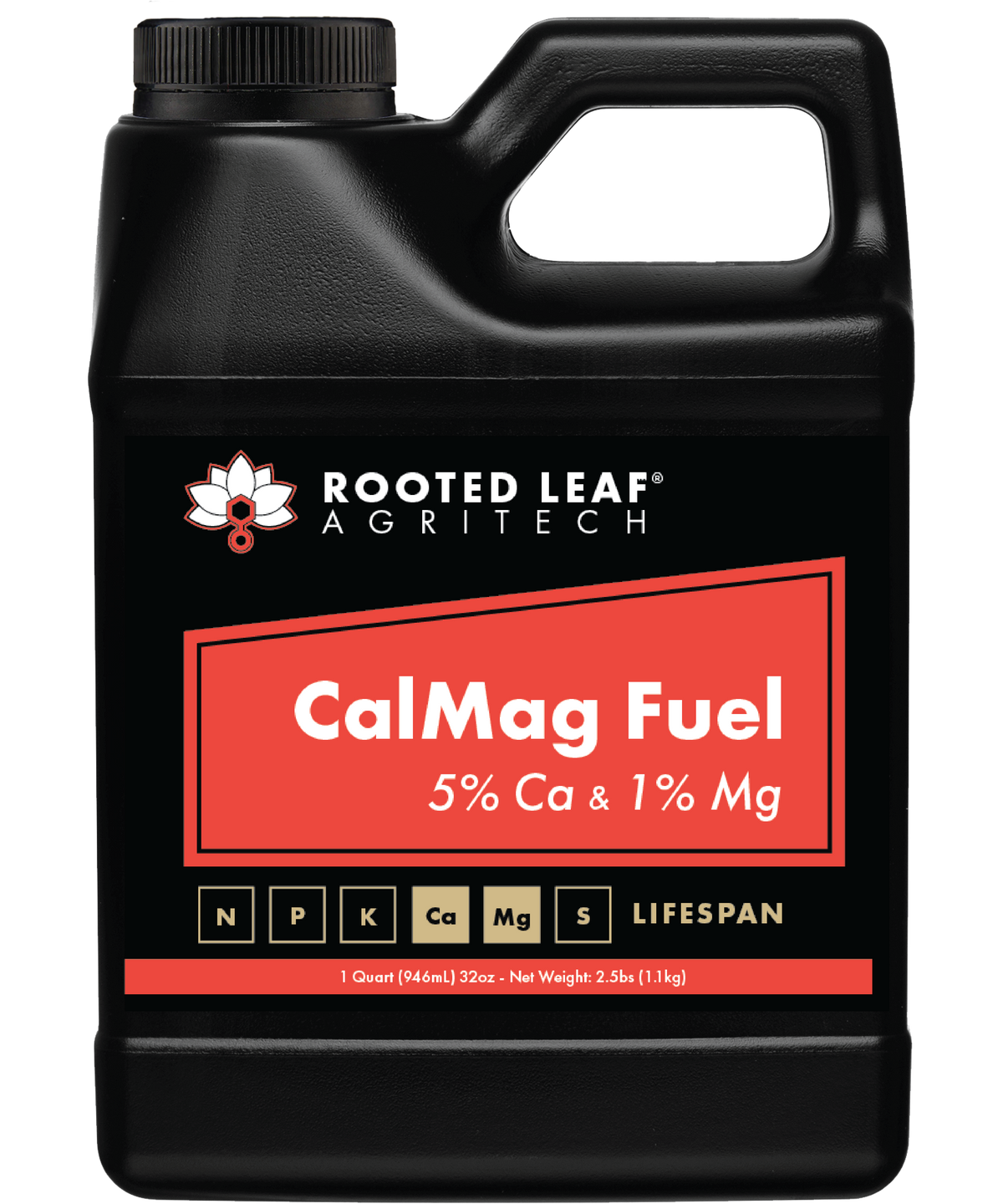
CalMag Fuel: Calcium & Magnesium Supplement

Calcium (Ca) 5%
5.0% Chelated Calcium (Ca)
Magnesium (Mg) 1%
1.0% Chelated Magnesium (Mg)

Derived From: fermented plant material (Citrus sinensis, Stevia rebaudiana), calcium fulvate, calcium acetate, calcium citrate, magnesium acetate

Also Contains Non-Plant Food Ingredient(s):

16% Carbon (from organic acids)

Application Rate

Soil / Coco: 1 to 6 mL/gal

Foliar: 10 to 20 mL/gal

Product Details

Solubility: 100% Water Soluble

pH: No Adjustment Needed

Shelf Life: 12 Months

pH adjustment not required. Compatible with all media types.

How to use it

Use rates and storage

Measure 1 to 6 mL per gallon throughout the lifespan, in peat, soil, or coco. For a foliar spray, use 10 to 20 mL per gallon. Mix well, no pH adjustment or aeration needed, then apply immediately and discard any leftover solution.

Application RateNotes
Soil, peat, or coco 1 to 6 mL/gal Per gallon of feedwater
Foliar spray 10 to 20 mL/gal Per gallon of spray; apply immediately

pH: No adjustment needed

Feed chart builder

These are starting points. Your water, medium, and growth stage change the math. Get exact numbers for your grow, free, in about two minutes.

You know the how. Here's the why.

Powered By Plants

Two plants, one calcium complex.

CalMag Fuel begins as fermented plant material: orange and stevia. It breaks down to the organic acids that carry its calcium and magnesium, and keep them soluble from the tank to the plant.

Powered By Plants

Powered by Plants seal: fermented from orange and stevia

Fermented plant material supplies the organic-acid carbon matrix.

Inside the bottle

Special Attributes

The calcium CalMag Fuel delivers, the atom at the center of chlorophyll, and the ion the plant's energy runs on. Pick a compound to explore its real structure.

Calcium acetate

This is one of the forms the calcium arrives in. CalMag Fuel carries its calcium as soluble organic-acid complexes: acetate, citrate, and fulvate, forms built to stay available for foliar and root uptake. Calcium acetate is the simplest of them, a calcium ion paired with two acetate groups. Once the plant takes that calcium up, it does the structural work the wall depends on, bridging the pectin chains shown in the schematic above.

One of the calcium forms in CalMag Fuel's derived-from
Molecular structure

Drag to rotate. Scroll or use +/- to zoom.

C₄H₆CaO₄

Calcium acetate is one of CalMag Fuel's soluble calcium forms. Calcium supports the connections between pectin chains in growing cell walls.

Citrus sinensis

Orange

The sweet orange has ancient roots in tropical Asia, and hundreds of cultivars are now grown worldwide. Sailors once planted the trees along trade routes because the fruit and peel are rich in vitamins, organic acids, and minerals. Those organic acids are the starting point: fermented, they become the acetate and citrate complexes that carry CalMag Fuel's calcium.

Signature molecule: Calcium acetate

Stevia rebaudiana

Stevia

Native to the subtropical highlands of Paraguay and Brazil, stevia produces sweet diterpene glycosides in its leaves. Stevia is one of the two source plants CalMag Fuel is fermented from.

Signature molecule: Chlorophyll a

The nutritional science

CalMag Fuel delivers the calcium a plant locks into its cell walls.

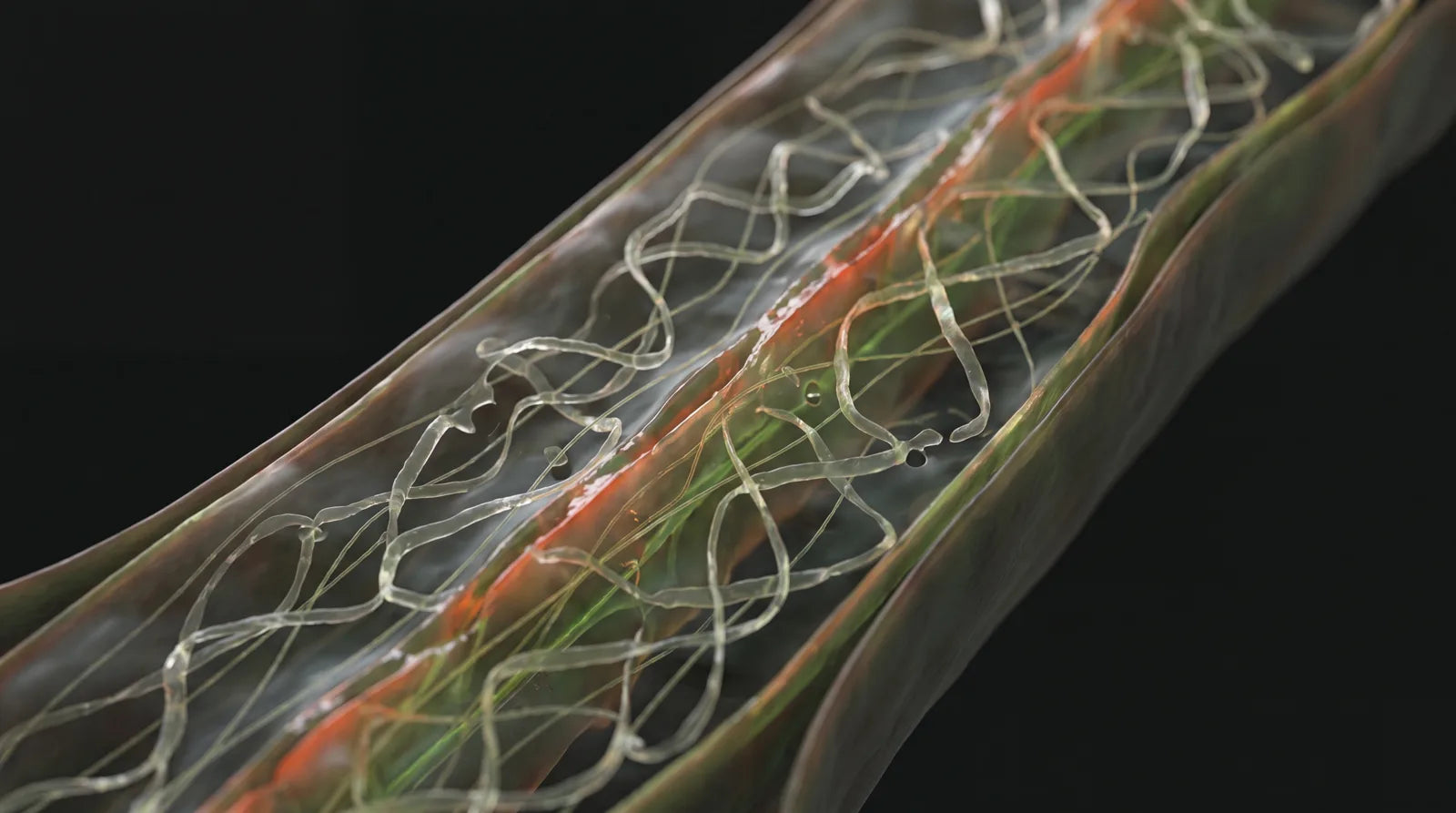
Illustration: a cross-section of a young cell wall whose pectin chains are loosely associated, small gaps opening between them.

01 Problem

Rapid growth tests wall integrity before deficiency becomes obvious.

A growing cell wall must resist turgor while staying flexible enough to expand. High light raises growth potential, heat and dry air raise hydraulic tension, and floral tissues differentiate fast while secretion and remodeling are still underway. Under intense conditions, the plant's structural needs keep changing as it grows.

Calcium is often treated as a number in solution, but supply alone does not decide how strong the walls become. The plant needs calcium to arrive where the wall's hydrated polymer network is being patterned, crosslinked, stretched and rebuilt.

The next panel shows what happens inside the plant.

HOMOGALACTURONAN (PECTIN CHAINS) CALCIUM BRIDGE COO⁻ COO⁻ Ca²⁺ Ca²⁺ Ca²⁺ one Ca²⁺ bridges two chains: the egg-box junction

The pectate egg-box: a calcium ion coordinated between the carboxyl groups of two homogalacturonan chains, cross-linking the pectin gel of the wall. Schematic.

02 Mechanism

Pectin exposes charged sites, and calcium turns those sites into junctions.

Pectin fills much of the hydrated matrix around cellulose microfibrils. As enzymes remove selected methyl groups from homogalacturonan, negatively charged carboxylates become available. Calcium coordinates adjacent chains at those sites, forming junction zones that alter stiffness, porosity, adhesion and how force travels through the wall.

The wall is not a fixed structure like masonry: pH, enzyme activity, pectin patterning, water status and growth rate all influence the result. In glandular trichomes studied in Lavandula, calcium appears in wall and subcuticular regions during secretion, which links basic wall mechanics to the integrity of these delicate glandular surfaces.

So Rooted Leaf built the formula to work with the plant.

5% Ca

calcium

1% Mg

magnesium

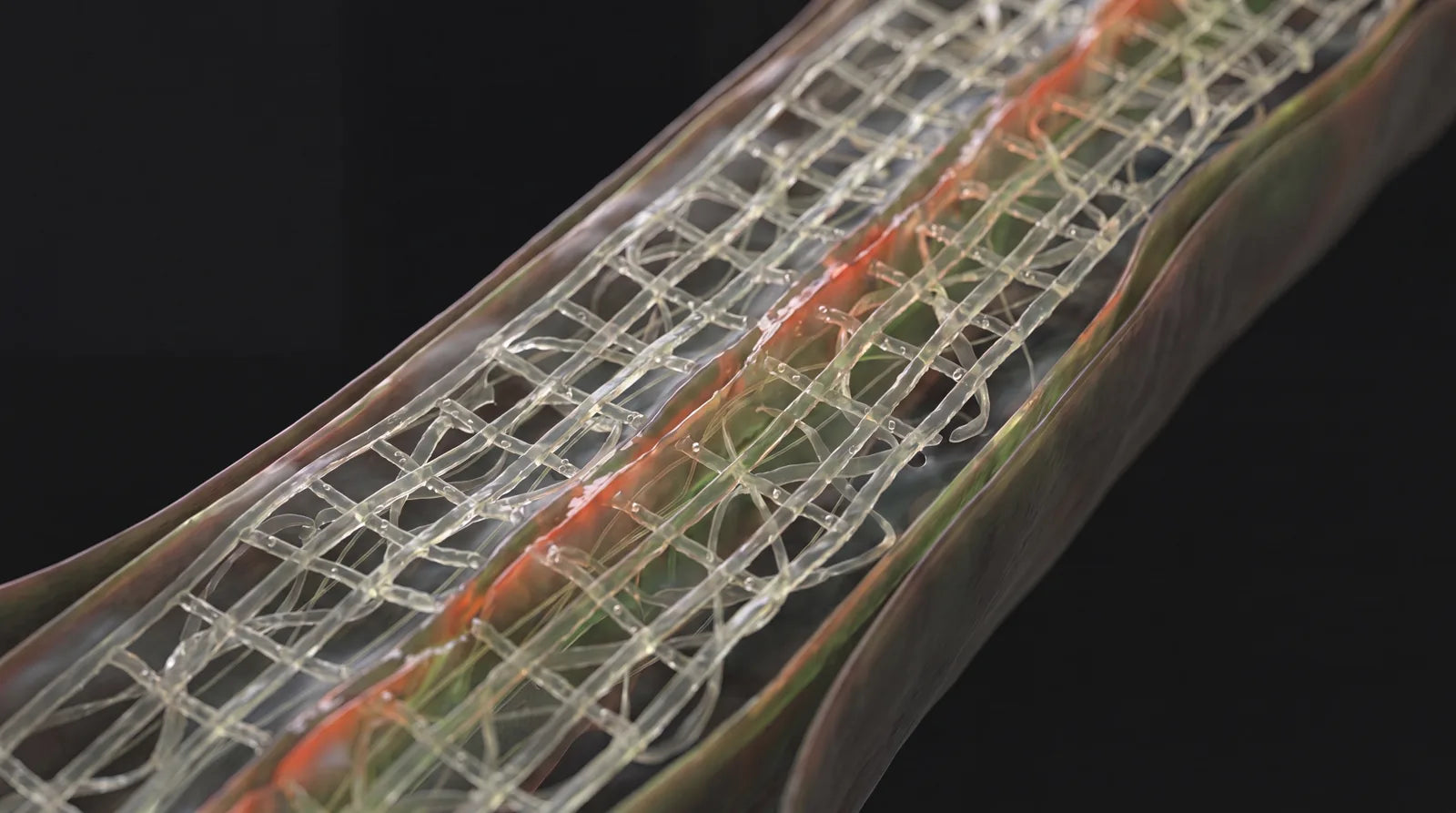
Illustration: the same cell wall reinforced, its pectin ribbons clipped tight by calcium bridges.

03 Solution

CalMag Fuel is built around the calcium-pectin relationship.

CalMag Fuel supplies calcium with magnesium inside a carbon-rich formula made from fermented orange and stevia. Magnesium supports the energy chemistry required to build and remodel the structure calcium helps organize. It is designed for the step where a mineral becomes part of the wall's structure.

Citrus is a pectin-rich plant, which ties it to the wall chemistry calcium works on, and stevia adds a glycoside-rich plant matrix around the minerals. What that gives the plant is growing walls that hold together, epidermal structures that stay supported, and flowers that can keep developing under intense conditions.

The label below shows what is in it.

Evidence Harholt et al. (2010) and Huang et al. (2010)

Powered by Plants seal: fermented from orange and stevia

Powered By Plants

Did you know?

Two stories about the plants CalMag Fuel is fermented from.

OrangeCitrus sinensis

Orange Peels. A Forest Reborn.

In 1997, ecologists and a Costa Rican juice company agreed to an unusual trade: the company could spread its orange peel and pulp on degraded pasture inside a national park. About 12,000 metric tons were spread before a lawsuit stopped the project. Sixteen years later, researchers found a young forest there, so thick that a large sign beside the road was hidden by trees and vines. The treated land held 176 percent more woody biomass than the pasture next door.

SteviaStevia rebaudiana

A Pretty Sweet Secret About Stevia

Stevia's sweet compounds can do more than sweeten. In a 2019 laboratory study, scientists used one of them, rebaudioside A, to form carriers a few nanometers across around curcumin, a compound that barely dissolves in water. Inside the carriers, curcumin's apparent solubility rose more than a million times, and in rats the curcumin levels in the blood over time were about nineteen times higher than with curcumin alone.

What is not in it

Calcium and magnesium. No added nitrogen.

A calcium supplement should also be judged by what it does not carry into your reservoir. CalMag Fuel adds calcium and magnesium as organic-acid complexes, and leaves the salts out.

0%

Added nitrogen. CalMag Fuel is nitrate-free.

  • No nitrates, phosphates, or sulfates.

    The salts a conventional Cal-Mag relies on are the ones that add to a loaded reservoir's salt load. CalMag Fuel carries none of them.

  • No chlorides or carbonates.

    Nothing extra goes into your reservoir alongside the calcium.

  • No preservatives, stabilizers, or emulsifiers.

    Just the fermented-plant acids and the minerals they carry.

  • No animal products.

    Powered by plants, start to finish.

Where the calcium comes from.

Calcium nitrate, the usual source of supplemental calcium, brings nitrogen with every dose. CalMag Fuel gets its calcium from organic-acid complexes instead, so when nitrogen goes into your feed stays your decision.

Calcium nitrate

Delivers calcium as a nitrate salt: nitrogen comes with it.

Organic-acid complexes

Calcium as fulvate, acetate, and citrate: no added nitrogen.

Comparison is of ingredient class from each product's label, not of crop results.

Quick Answers

When do I run it?

Through the whole cycle, in veg and in bloom. Soil or coco: 1 to 6 mL per gallon of feedwater. Foliar: 10 to 20 mL per gallon, 2 to 3 times a week until the beginning of week 3 in bloom. Apply immediately and discard any leftover solution.

Do I need to pH-adjust or aerate?

No. Mix the solution well, then apply it. No pH adjustment or aeration is needed. Never mix concentrated nutrients together before they go into the reservoir, and gently swirl the bottle before each use.

Why is there no nitrogen in a CalMag?

Because the usual source of supplemental calcium is calcium nitrate, which adds nitrogen whether you want it or not. CalMag Fuel gets its calcium from organic-acid complexes instead, so you can feed calcium without also feeding nitrogen. It also means no nitrates, phosphates, or sulfates going into the tank.

What's your return policy?

Unopened products can be returned within 15 days of delivery for a refund of the item price; original shipping isn't refunded. Email info@rootedleaf.com first for a return authorization. Opened products can't be returned. If your order arrives damaged, email us pictures and we'll send a replacement within 1-2 business days of confirming it.

I have a question you haven't answered here.

That's what GNOME is for: it knows the whole Rooted Leaf line, plant science, plant nutrition science, and feed programs for 150+ crops. Tap the Ask GNOME button below and ask away. Prefer a person? Email info@rootedleaf.com or call (206) 331-4700.

Ask GNOME instead

Instant, product-specific answers from our grow assistant. Tap the Ask GNOME button below to start.

The Rooted Leaf lineup

Complete Your Program

Primer A
Primer A

Part A of the base feed every program builds on: potassium and magnesium.

From $9.97
Primer B
Primer B

Part B of the base feed every program builds on: nitrogen, phosphorus and calcium.

From $9.97
Cryo Sil
Cryo Sil

Silicon to go with calcium, both building stronger cell walls.

From $11.97
Micro Flow
Micro Flow

Five micronutrients in one bottle to round out the feed.

From $14.97

Policies and reference

Disclaimers

Guidance from GNOME and this page is educational and general. Plant results vary with crop, environment, water, and program, and nothing here is a guarantee of specific results.

100% made by us, from whole plant to final bottle. We manufacture all of our own chelates and complexes from scratch, and quality-check every batch. If an order arrives damaged or is not right, contact us and we will make it right.

Shipping policy · Refund and returns · Terms of service · Safety data sheet · Heavy metals test results

Full guaranteed analysis

Guaranteed Analysis Calcium (Ca) 5%
5.0% Chelated Calcium (Ca)
Magnesium (Mg) 1%
1.0% Chelated Magnesium (Mg)

Derived From: fermented plant material (Citrus sinensis, Stevia rebaudiana), calcium fulvate, calcium acetate, calcium citrate, magnesium acetate

Also contains non-plant food ingredient(s) 16% Carbon (from organic acids)

1 Gallon (3.78L) 128oz. Net weight 10.0 lbs (4.5kg).

This product is intended as a supplement to a regular fertilization program and may not, by itself, provide all the nutrients normally required during the growth cycle.

Technical Data

Storage and use Store in a cool, dark place away from direct sunlight, in the original container, between 50°F and 80°F (10°C and 27°C). Compatible with all media types.

Mixing Never mix concentrated nutrients together before adding them to the reservoir. pH adjustment is not required. Do not aerate feedwater. Gently swirl before each use. Apply immediately and discard any remaining solution.

Use all product within 12 months of the original purchase date.

pH range
No adjustment needed
Solubility
100% water-soluble liquid solution
Shelf life (months)
12
Shipping & Storage

Processing Orders ship within 1-2 business days and typically arrive within 5 days in the US. We ship to the US, Canada and the other countries listed at checkout.

Methods Standard, 2-Day and Overnight shipping, with the rate for your address shown at checkout. International orders ship with duties and import taxes paid at checkout.

Storage Store in a cool, dry place away from direct sunlight. Shelf life: 12 months.

Note With Standard, 2-Day or Overnight shipping, the 5 gal size ships as two 2.5 gal jugs. With Freight, offered at checkout on larger orders, it ships as one 5 gal jug.

CalMag Fuel

Grower reviews

Grown with CalMag Fuel? Tell other growers how it went.

No reviews yet

Be the first grower to say how CalMag Fuel worked for you. We'll email you a review link for your order.