
Did you know? A CalMag Fuel story5 min readJump to the deep dive

In 1998, a Costa Rican juice company spread about 12,000 metric tons of orange peel and pulp over a worn-out cattle pasture. Sixteen years later, researchers measured the site and found a young forest, with far more wood in its trees than the untreated pasture next door. Here is how that happened, and what an orange is made of.

A trade: forest land for free disposal

In 1997, the ecologists Daniel Janzen and Winnie Hallwachs, who had spent years helping to restore the Área de Conservación Guanacaste, a tropical dry forest reserve in northwest Costa Rica, proposed a trade to Del Oro, an orange juice producer next to the park. Del Oro would donate a stretch of forested land to the conservation area. In return, the company could dump its peel and pulp, free of charge, on degraded land inside the park: old cattle pasture where the forest had been cleared.

Deliveries began in 1998. About 1,000 truckloads, roughly 12,000 metric tons of orange peel and pulp, were spread across three hectares of that pasture.

A lawsuit stops the project

A rival juice company, TicoFruit, took Del Oro to court, arguing that it had defiled a national park. TicoFruit won its case before Costa Rica's Supreme Court, the dumping stopped, and the site was largely overlooked for the next fifteen years.

The story in numbers

metric tons of orange peel and pulp spread on the pasture
12,000t
hectares of worn-out cattle pasture
3ha
between spreading the peel and the 2014 survey
16yrs
more woody biomass than the untreated plot next door
176%

A sign hidden by trees

In 2013, Princeton researcher Timothy Treuer was discussing research ideas with Janzen, who mentioned that the old orange-peel site had never been thoroughly evaluated. On a later trip, Treuer went to find it. The plot had been marked with a sign about seven feet long, with bright yellow lettering, a few feet from the road. Trees and vines had grown so thick around it that he could not see it.

This is one of the only instances I've ever heard of where you can have cost-negative carbon sequestration.

Timothy Treuer, Princeton University

What the scientists measured

Treuer and Jonathan Choi, then a Princeton undergraduate who made the project his senior thesis, ran survey lines through the treated land and through untreated pasture across the road, recording the species and trunk width of every tree along them. They also compared soil sampled at the site in 2000 with soil sampled in 2014.

Sixteen years after the peel was spread, the treated area held 176 percent more aboveground woody biomass, the weight of wood in its trees, than the untreated plot next door. It also had richer soil, more kinds of trees and a denser forest canopy. Treuer called it one of the only cases he had heard of where capturing carbon cost less than nothing: the company saved on waste disposal, and the park gained a young forest.

The orange-peel site, sixteen years later

Schematic cross-section of the site in 2014. On the left, the land where orange peel and pulp were spread in 1998 holds a young forest of tall, dense trees, with peel fragments in the topsoil and a sign half hidden by vines near the road. Across the road on the right, the untreated pasture has grass and one small tree. A dashed survey line runs along the ground through each plot, with a mark at every tree. Peel spread, 1998 young forest, 2014 Untreated pasture across the road
  • Orange peel and pulp: about 1,000 truckloads, roughly 12,000 metric tons, spread over three hectares of old cattle pasture in 1998
  • The treated land in 2014, with more wood in its trees, more kinds of trees and a denser canopy than the pasture
  • The untreated pasture across the road
  • A tree on a survey line, where the researchers recorded its species and trunk width
  • The sign that marked the plot, about seven feet long with bright yellow lettering, which trees and vines had hidden by 2013
Schematic, not to scale; the trees and their number are not taken from the survey. The treated land held 176 percent more aboveground woody biomass than the pasture, but with only one treated plot, the researchers could not prove what caused the recovery.

The site, 1997 to 2017

  1. 1997

    The deal

    Janzen and Hallwachs offer Del Oro a trade: forest land for the park, free disposal for its peel.

  2. 1998

    The peel is spread

    About 1,000 truckloads, roughly 12,000 metric tons of peel and pulp, cover three hectares of pasture.

  3. Then

    The lawsuit

    A rival juice company wins its case in Costa Rica's Supreme Court, and the dumping stops.

  4. 2013

    The hidden sign

    Treuer looks for the site and cannot see its sign through the trees and vines.

  5. 2014

    The survey

    Researchers measure every tree along their survey lines and sample the soil.

  6. 2017

    The paper

    The results are published in Restoration Ecology.

Aboveground woody biomass, sixteen years after the peel was spread

Untreated pasture next door

Baseline

Orange-peel plot

176% more

The untreated plot is set at 100; the orange-peel plot measured 276. Treuer and colleagues, Restoration Ecology.

What caused the recovery

The researchers could measure the recovery, but they could not prove what caused it. There was only one treated plot, and the authors later wrote that without replication they could only go so far in explaining the result. One measurement stands out: soil samples from the treated area held significantly higher levels of major nutrients and important micronutrients than samples from the pasture beside it. Twelve thousand tons of peel and pulp is a great deal of plant material breaking down into the soil.

Rooted Leaf Deep Dive

Inside an orange

Rooted Leaf Deep Dive: inside an orange

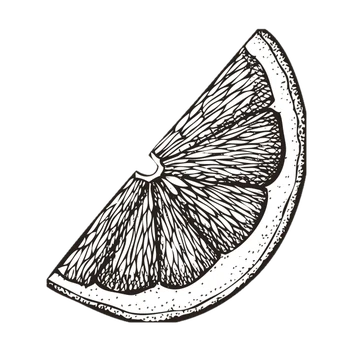
Cut an orange slice and you can see three distinct parts, each with its own chemistry. The colored outer skin, the flavedo, is dotted with tiny oil glands. Bend a strip of peel and the fine spray that comes out is that oil, which in sweet oranges is commonly 90 to 97 percent d-limonene. Under the skin is the white, spongy albedo, which holds much of the orange's pectin, the fiber that makes marmalade set, and far more hesperidin, the orange's main flavonoid, than the juice does. Inside the segments, the juice vesicles hold the fruit's sugars and acids, and the most abundant of those acids is citric acid.

Tap a number to explore the slice.
  1. The flavedo, the colored skin

    Dotted with tiny oil glands. In sweet oranges the oil is commonly 90 to 97 percent d-limonene.

  2. The albedo, the white pith

    Spongy and white. It holds much of the orange's pectin and far more hesperidin than the juice.

  3. The juice vesicles

    Small sacs inside the segments that hold the juice, its sugars and its acids. The most abundant acid is citric acid.

How an organic acid carries calcium

Citric acid matters here because it binds calcium. A citrate ion has three carboxylate groups that can bind calcium ions, and calcium paired with citrate is calcium citrate. Acetic acid, the acid in vinegar, which microbes produce during fermentation, binds calcium too: one calcium ion paired with two acetate ions is calcium acetate.

CalMag Fuel carries its calcium in organic-acid forms like these: calcium acetate, calcium citrate and calcium fulvate. Calcium nitrate, the usual source of supplemental calcium, adds nitrogen with every dose; these forms do not.

How an organic acid carries calcium

  1. Citric acid

    The most abundant acid in orange juice, with three carboxylate groups that can bind calcium.

  2. Fermentation

    Microbes produce organic acids such as acetic acid, the acid in vinegar.

  3. Calcium forms

    Bound to calcium, these acids form calcium citrate and calcium acetate, two of the forms CalMag Fuel carries.

Orange and CalMag Fuel

We love how much there is to explore in an orange, from the oil glands in its peel to the acids in its juice. Orange is also one of the two plants we ferment for CalMag Fuel, alongside stevia. There is a lot to appreciate in a fruit this familiar.

Shop CalMag Fuel
CalMag Fuel
CalMag Fuel
From $14.97

In 1998, a Costa Rican juice company spread about 12,000 metric tons of orange peel and pulp over a worn-out cattle pasture. Sixteen years later, researchers measured the site and found a young forest, with far more wood in its trees than the untreated pasture next door. Here is how that happened, and what an orange is made of.

A trade: forest land for free disposal

In 1997, the ecologists Daniel Janzen and Winnie Hallwachs, who had spent years helping to restore the Área de Conservación Guanacaste, a tropical dry forest reserve in northwest Costa Rica, proposed a trade to Del Oro, an orange juice producer next to the park. Del Oro would donate a stretch of forested land to the conservation area. In return, the company could dump its peel and pulp, free of charge, on degraded land inside the park: old cattle pasture where the forest had been cleared.

Deliveries began in 1998. About 1,000 truckloads, roughly 12,000 metric tons of orange peel and pulp, were spread across three hectares of that pasture.

A lawsuit stops the project

A rival juice company, TicoFruit, took Del Oro to court, arguing that it had defiled a national park. TicoFruit won its case before Costa Rica's Supreme Court, the dumping stopped, and the site was largely overlooked for the next fifteen years.

A sign hidden by trees

In 2013, Princeton researcher Timothy Treuer was discussing research ideas with Janzen, who mentioned that the old orange-peel site had never been thoroughly evaluated. On a later trip, Treuer went to find it. The plot had been marked with a sign about seven feet long, with bright yellow lettering, a few feet from the road. Trees and vines had grown so thick around it that he could not see it.

What the scientists measured

Treuer and Jonathan Choi, then a Princeton undergraduate who made the project his senior thesis, ran survey lines through the treated land and through untreated pasture across the road, recording the species and trunk width of every tree along them. They also compared soil sampled at the site in 2000 with soil sampled in 2014.

Sixteen years after the peel was spread, the treated area held 176 percent more aboveground woody biomass, the weight of wood in its trees, than the untreated plot next door. It also had richer soil, more kinds of trees and a denser forest canopy. Treuer called it one of the only cases he had heard of where capturing carbon cost less than nothing: the company saved on waste disposal, and the park gained a young forest.

What caused the recovery

The researchers could measure the recovery, but they could not prove what caused it. There was only one treated plot, and the authors later wrote that without replication they could only go so far in explaining the result. One measurement stands out: soil samples from the treated area held significantly higher levels of major nutrients and important micronutrients than samples from the pasture beside it. Twelve thousand tons of peel and pulp is a great deal of plant material breaking down into the soil.

Rooted Leaf Deep Dive: inside an orange

Cut an orange slice and you can see three distinct parts, each with its own chemistry. The colored outer skin, the flavedo, is dotted with tiny oil glands. Bend a strip of peel and the fine spray that comes out is that oil, which in sweet oranges is commonly 90 to 97 percent d-limonene. Under the skin is the white, spongy albedo, which holds much of the orange's pectin, the fiber that makes marmalade set, and far more hesperidin, the orange's main flavonoid, than the juice does. Inside the segments, the juice vesicles hold the fruit's sugars and acids, and the most abundant of those acids is citric acid.

How an organic acid carries calcium

Citric acid matters here because it binds calcium. A citrate ion has three carboxylate groups that can bind calcium ions, and calcium paired with citrate is calcium citrate. Acetic acid, the acid in vinegar, which microbes produce during fermentation, binds calcium too: one calcium ion paired with two acetate ions is calcium acetate.

CalMag Fuel carries its calcium in organic-acid forms like these: calcium acetate, calcium citrate and calcium fulvate. Calcium nitrate, the usual source of supplemental calcium, adds nitrogen with every dose; these forms do not.

Orange and CalMag Fuel

We love how much there is to explore in an orange, from the oil glands in its peel to the acids in its juice. Orange is also one of the two plants we ferment for CalMag Fuel, alongside stevia. There is a lot to appreciate in a fruit this familiar.

Sources

Treuer, T. L. H., Choi, J. J., Janzen, D. H., Hallwachs, W., and colleagues. Low-cost agricultural waste accelerates tropical forest regeneration. Restoration Ecology 26 (2018): 275 to 283, first published online in 2017. Read the paper

Princeton University: Orange is the new green: How orange peels revived a Costa Rican forest, 2017. The quotation from Timothy Treuer is from this release, as carried by ScienceDaily.

Choi, J. J., and colleagues, Tropical Conservation Science, 2018. Read the authors' 2018 commentary

On the orange's chemistry: a review of Citrus essential oils in Frontiers in Plant Science (2019); a study of pectin in orange albedo; a study of hesperidin in citrus peel and juice; organic acids in citrus juices; citrus peel anatomy, University of Florida IFAS; the structure of the citrate ion, ChEBI.
Back to CalMag Fuel

Leave a comment

Please note, comments need to be approved before they are published.

This site is protected by hCaptcha and the hCaptcha Privacy Policy and Terms of Service apply.

Keep reading

View all

Fresh tea leaves and a bundle of pruned tea twigs on a laboratory bench beside an arc-plasma chamber glowing violet, with a glass dish of black activated carbon granules

Tea's Plasma Plot Twist

Researchers used arc plasma to make a carbon-dioxide adsorbent from tea-twig waste. This article explains how the carbon was made and describes the microscopic surfaces inside it.

Read moreabout Tea's Plasma Plot Twist

A magnified lavender oil gland on the calyx surface: a golden pool of oil held under a clear cuticle dome, above a row of secretory cells on a short stalk

Lavender's Hidden Laboratories

Microscopic lavender glands make aromatic compounds and store oil above their secretory cells. Follow the research from flower anatomy and scent-making enzymes to a standardized oral lavender-oil preparation studied in a human trial.

Read moreabout Lavender's Hidden Laboratories

A scouting circuit around a potted plant with four numbered checks: leaf undersides under a hand lens, the growing tip, a yellow sticky card and the roots.

Common pests and diseases: prevention and first response

Preventing problems, scouting for them and responding gently first.

Read moreabout Common pests and diseases: prevention and first response