
Did you know? A lavender story4 min readJump to the deep dive

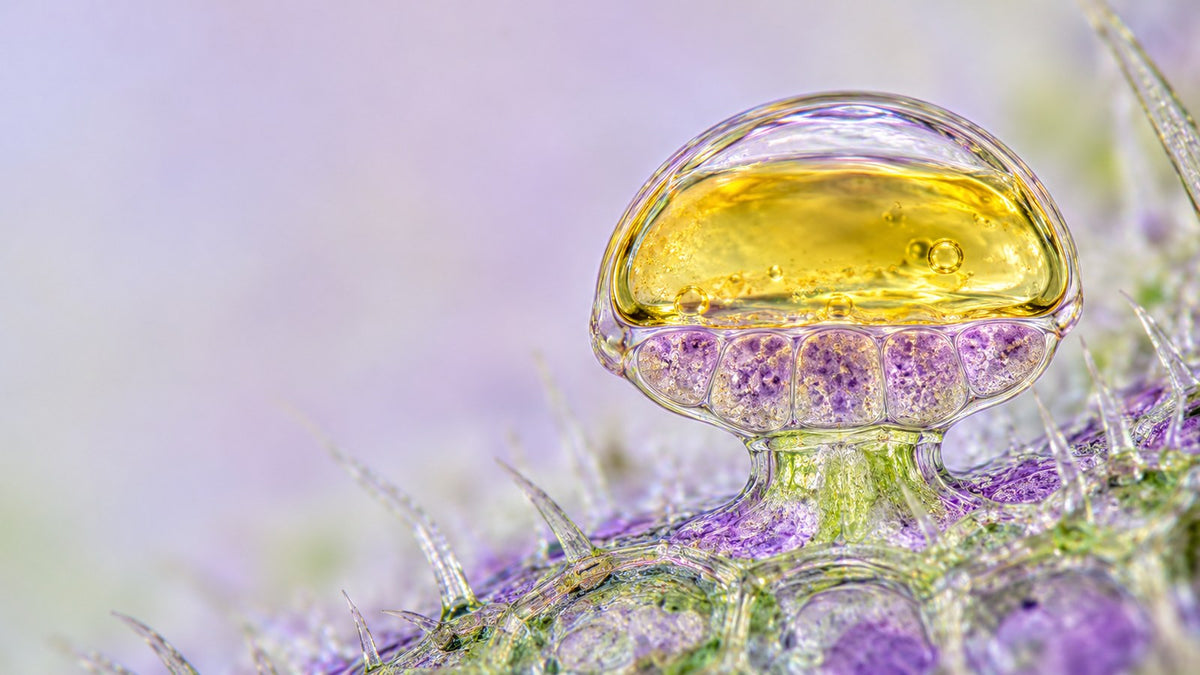
Lavender's fragrant oil collects in microscopic reservoirs beneath the plant's outer cuticle. In Lavandula angustifolia, each mature peltate gland has a disk of eight secretory cells with an oil cavity above them. Researchers have examined these glands as they develop, measured the oils from separate flower parts and identified enzymes that make two of lavender's prominent aromatic compounds.

The cup around the flower

The calyx is the small cup around a lavender flower; the corolla is the flower's petals. Tyler Wilson and colleagues separated these parts, leaves and whole flowering tops from cultivated Lavandula angustifolia grown in Utah, then steam-distilled and analyzed the oils.

In their study published in 2021, the calyx yielded substantially more oil than the corolla. The calyx oil contained 32.0 percent linalyl acetate and 32.9 percent linalool. Oil from the whole flowering top contained 34.3 percent and 26.5 percent, respectively. Those two compounds were prominent in both oils.

Secretory cells beneath a cuticle

Lavender has several kinds of surface hairs, including oil-producing glandular trichomes. Yanan Zhang and colleagues examined peltate glands in L. angustifolia in a 2023 microscopy study. Each gland has a base attached to the plant surface, a short stalk and a broad secretory head.

The head's eight cells form a disk. They produce oil that accumulates above the cells in a cavity beneath the cuticle. The same study found peltate glands on the sepals that form the calyx and on both surfaces of the leaves.

Lavender research in numbers

secretory cells in a mature peltate gland head
8
adults enrolled in Kasper's 2014 Silexan trial
539
duration of the randomized trial
10weeks

Linalyl acetate in two distilled oils

Calyx oil

32.0%

Whole flowering-top oil

34.3%

Relative chromatographic peak area in the Utah L. angustifolia samples. Wilson and colleagues, 2021, Table 1.

Linalool in the same two oils

Calyx oil

32.9%

Whole flowering-top oil

26.5%

Relative chromatographic peak area, measured in the same study. Wilson and colleagues, 2021, Table 1.

The enzymes involved in scent production

Alexander Lane and colleagues investigated gene expression in floral glands of L. angustifolia. Their 2010 paper reported strong expression of linalool synthase, the enzyme responsible for producing linalool. DXS, an enzyme associated with the DXP pathway that supplies terpene precursors, was also strongly expressed in the glands.

The most abundant transcript in those floral glands corresponded to cadinene synthase, although sesquiterpenes were minor constituents of the essential oil. The authors proposed that the supply of precursors could limit sesquiterpene production in lavender flowers.

Lavender oil in pharmacology experiments

In 2013, Anita Schuwald and colleagues tested standardized lavender oil, linalool and linalyl acetate in experimental systems that included isolated mouse nerve terminals, cultured rat hippocampal neurons and cell lines. They found that the oil inhibited calcium entry through several types of voltage-operated calcium channels, including N, P/Q and T types.

Calcium imaging recorded changes in calcium inside the cells, while electrical recordings measured currents through individual channel types. In cell lines expressing N-type channels, the currents recovered after the oil was washed out.

A standardized oral preparation in a human trial

In a randomized, double-blind trial reported by Siegfried Kasper and colleagues in 2014, the standardized oral lavender-oil preparation Silexan, tested at 160 mg or 80 mg daily over ten weeks in 539 adults with generalized anxiety disorder, produced greater reductions in Hamilton Anxiety Scale total scores than placebo at both doses.

Rooted Leaf Deep Dive

Rooted Leaf Deep Dive: linalool and linalyl acetate

Linalool is a terpene alcohol. Linalyl acetate is an ester. In a 2023 study of lavender and its hybrid lavandin, Jingrui Li and colleagues tested purified LaAAT4, an enzyme from L. angustifolia, with two different starting alcohols.

Supplied with linalool and the acetyl donor acetyl-CoA, LaAAT4 made linalyl acetate. With lavandulol as the starting alcohol, the same enzyme made lavandulyl acetate. A second enzyme, LaAAT3, made lavandulyl acetate but did not convert linalool into linalyl acetate.

The team used gas chromatography and mass spectrometry to identify the products, comparing them with authentic standards analyzed under the same conditions.

Rooted Leaf Deep Dive: how the gland develops

Zhang and colleagues followed gland development from a single surface cell. Division produced basal and apical cells, followed by the stalk and the initial head cell. Further divisions formed the mature disk of eight secretory cells. As secretion began, oil accumulated in the cavity between that disk and the cuticle.

A lavender spike has clusters of small tubular flowers. An enlarged ribbed calyx leads to a gland section with oil above the secretory cells, under the cuticle. A top view shows eight cells. The spike bears small two-lipped tubular flowers, each in a ribbed calyx. A calyx surface gland is enlarged below. Its oil reservoir lies above the secretory disk, beneath a dome of cuticle; a short stalk attaches it to the plant surface. The section intersects four of the eight cells, which appear together in the top view. Schematic, not to scale. Lavender spike Calyx Cuticle Oil reservoir Secretory cells Stalk Plant surface Secretory disk, top view Eight secretory cells
Drawn schematic, not to scale.
Tap a number to explore Lavandula angustifolia.
  1. The flower spike

    Researchers separated corollas, calyces and leaves to compare the oils from cultivated Lavandula angustifolia.

  2. Around the flowers

    Peltate glands occur on the sepals that form the calyx. The oil reservoir lies above the secretory cells.

  3. The leaves

    Microscopy also found peltate and capitate glandular trichomes on the leaves.

Lavender's fragrant oil collects in microscopic reservoirs beneath the plant's outer cuticle. In Lavandula angustifolia, each mature peltate gland has a disk of eight secretory cells with an oil cavity above them. Researchers have examined these glands as they develop, measured the oils from separate flower parts and identified enzymes that make two of lavender's prominent aromatic compounds.

The cup around the flower

The calyx is the small cup around a lavender flower; the corolla is the flower's petals. Tyler Wilson and colleagues separated these parts, leaves and whole flowering tops from cultivated Lavandula angustifolia grown in Utah, then steam-distilled and analyzed the oils.

In their study published in 2021, the calyx yielded substantially more oil than the corolla. The calyx oil contained 32.0 percent linalyl acetate and 32.9 percent linalool. Oil from the whole flowering top contained 34.3 percent and 26.5 percent, respectively. Those two compounds were prominent in both oils.

Secretory cells beneath a cuticle

Lavender has several kinds of surface hairs, including oil-producing glandular trichomes. Yanan Zhang and colleagues examined peltate glands in L. angustifolia in a 2023 microscopy study. Each gland has a base attached to the plant surface, a short stalk and a broad secretory head.

The head's eight cells form a disk. They produce oil that accumulates above the cells in a cavity beneath the cuticle. The same study found peltate glands on the sepals that form the calyx and on both surfaces of the leaves.

The enzymes involved in scent production

Alexander Lane and colleagues investigated gene expression in floral glands of L. angustifolia. Their 2010 paper reported strong expression of linalool synthase, the enzyme responsible for producing linalool. DXS, an enzyme associated with the DXP pathway that supplies terpene precursors, was also strongly expressed in the glands.

The most abundant transcript in those floral glands corresponded to cadinene synthase, although sesquiterpenes were minor constituents of the essential oil. The authors proposed that the supply of precursors could limit sesquiterpene production in lavender flowers.

Lavender oil in pharmacology experiments

In 2013, Anita Schuwald and colleagues tested standardized lavender oil, linalool and linalyl acetate in experimental systems that included isolated mouse nerve terminals, cultured rat hippocampal neurons and cell lines. They found that the oil inhibited calcium entry through several types of voltage-operated calcium channels, including N, P/Q and T types.

Calcium imaging recorded changes in calcium inside the cells, while electrical recordings measured currents through individual channel types. In cell lines expressing N-type channels, the currents recovered after the oil was washed out.

A standardized oral preparation in a human trial

In a randomized, double-blind trial reported by Siegfried Kasper and colleagues in 2014, the standardized oral lavender-oil preparation Silexan, tested at 160 mg or 80 mg daily over ten weeks in 539 adults with generalized anxiety disorder, produced greater reductions in Hamilton Anxiety Scale total scores than placebo at both doses.

Rooted Leaf Deep Dive: linalool and linalyl acetate

Linalool is a terpene alcohol. Linalyl acetate is an ester. In a 2023 study of lavender and its hybrid lavandin, Jingrui Li and colleagues tested purified LaAAT4, an enzyme from L. angustifolia, with two different starting alcohols.

Supplied with linalool and the acetyl donor acetyl-CoA, LaAAT4 made linalyl acetate. With lavandulol as the starting alcohol, the same enzyme made lavandulyl acetate. A second enzyme, LaAAT3, made lavandulyl acetate but did not convert linalool into linalyl acetate.

The team used gas chromatography and mass spectrometry to identify the products, comparing them with authentic standards analyzed under the same conditions.

Rooted Leaf Deep Dive: how the gland develops

Zhang and colleagues followed gland development from a single surface cell. Division produced basal and apical cells, followed by the stalk and the initial head cell. Further divisions formed the mature disk of eight secretory cells. As secretion began, oil accumulated in the cavity between that disk and the cuticle.

Lavender and Primer B

Lavender and juniper are the two source plants Primer B is fermented from. Explore Primer B's ingredients, guaranteed analysis and application directions on its product page.

Sources

Wilson and colleagues, 2021: oil profiles and yields from separate parts of cultivated Lavandula angustifolia.

Zhang and colleagues, 2023: microscopy and development of lavender glandular trichomes.

Lane and colleagues, 2010: gene expression in lavender floral glands.

Li and colleagues, 2023: lavender and lavandin genomes and the LaAAT4 enzyme assay.

Schuwald and colleagues, 2013: calcium-channel experiments with lavender oil and its constituents.

Kasper and colleagues, 2014: the randomized trial of the standardized oral preparation Silexan.
Back to Primer B

Leave a comment

Please note, comments need to be approved before they are published.

This site is protected by hCaptcha and the hCaptcha Privacy Policy and Terms of Service apply.

Keep reading

View all

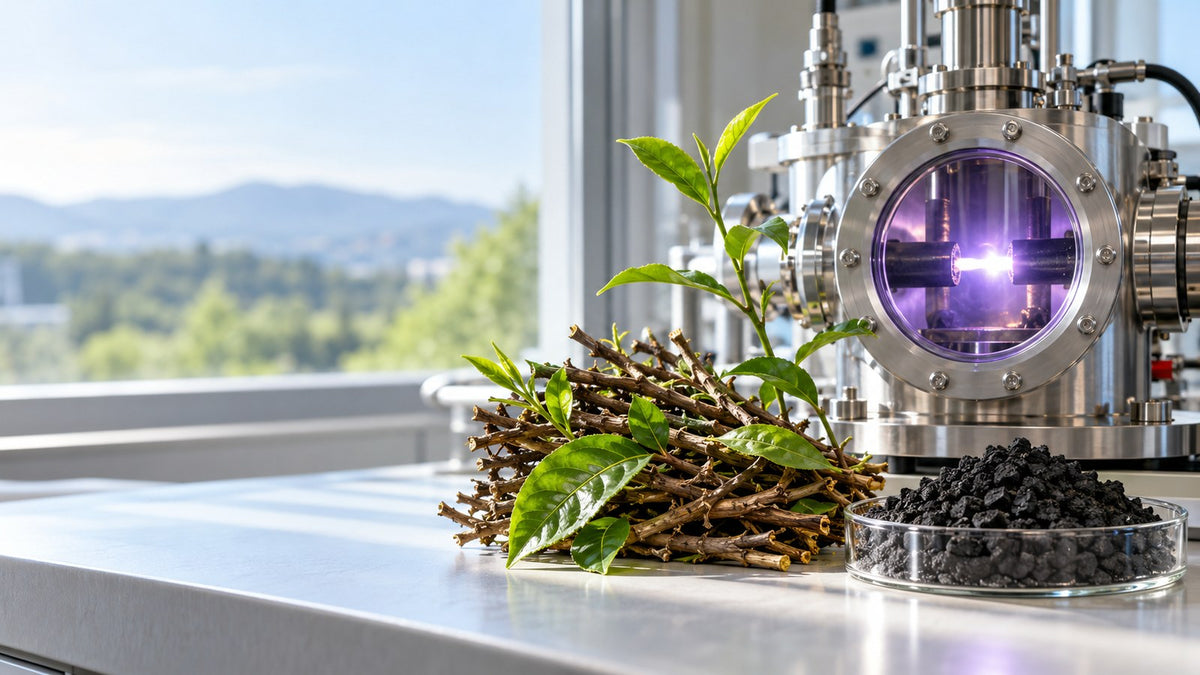
Fresh tea leaves and a bundle of pruned tea twigs on a laboratory bench beside an arc-plasma chamber glowing violet, with a glass dish of black activated carbon granules

Tea's Plasma Plot Twist

Researchers used arc plasma to make a carbon-dioxide adsorbent from tea-twig waste. This article explains how the carbon was made and describes the microscopic surfaces inside it.

Read moreabout Tea's Plasma Plot Twist

A magnified lavender oil gland on the calyx surface: a golden pool of oil held under a clear cuticle dome, above a row of secretory cells on a short stalk

Lavender's Hidden Laboratories

Microscopic lavender glands make aromatic compounds and store oil above their secretory cells. Follow the research from flower anatomy and scent-making enzymes to a standardized oral lavender-oil preparation studied in a human trial.

Read moreabout Lavender's Hidden Laboratories

A scouting circuit around a potted plant with four numbered checks: leaf undersides under a hand lens, the growing tip, a yellow sticky card and the roots.

Common pests and diseases: prevention and first response

Preventing problems, scouting for them and responding gently first.

Read moreabout Common pests and diseases: prevention and first response