

A sunlit sandstone archive room with pressed leaf specimens on the shelves, colour reference cards and a hand lens on a stone table, and a living plant in the foreground

From the blog

Notes from the bench

We share what we're learning about plants, from everyday growing questions to the botanical ingredients we love working with. Explore stories and guides from our agronomy team and GNOME, our AI grow assistant.

Grower Guides ingredient stories

A closer look at , two plants we love working with.
Explore Grower Guides

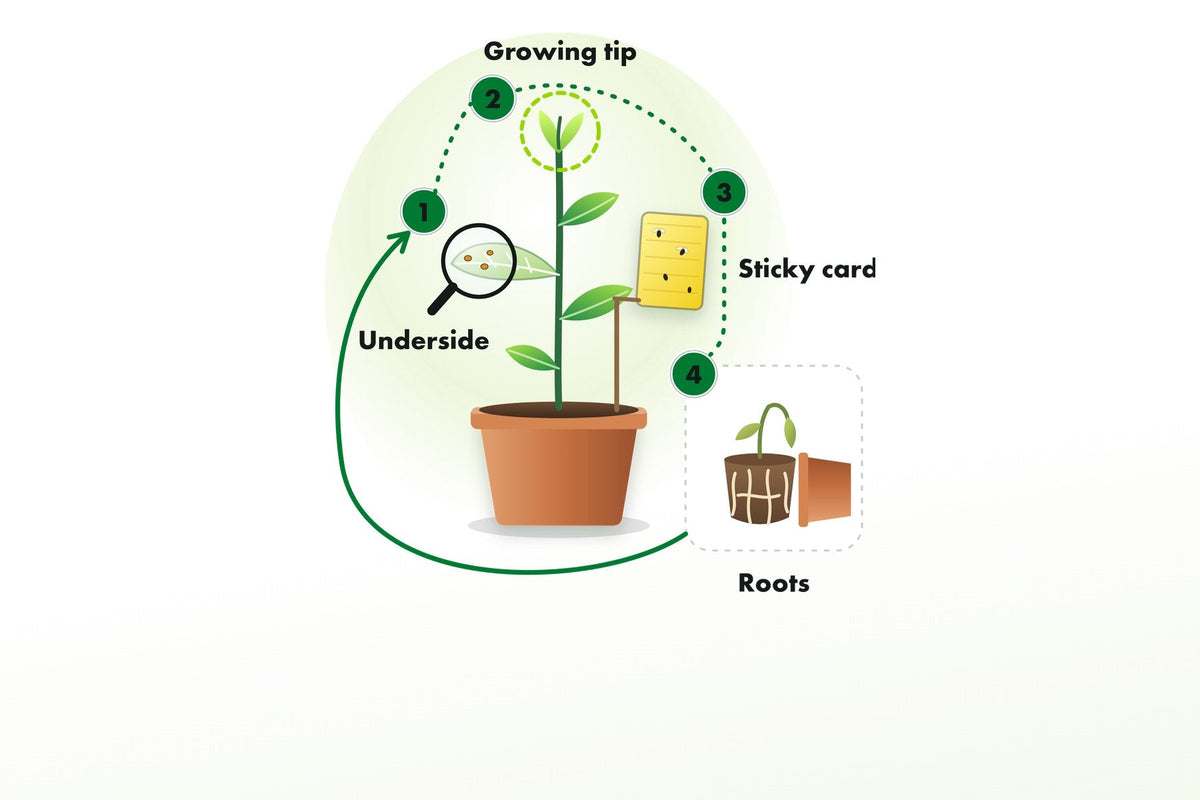
A scouting circuit around a potted plant with four numbered checks: leaf undersides under a hand lens, the growing tip, a yellow sticky card and the roots.

Common pests and diseases: prevention and first response
Preventing problems, scouting for them and responding gently first.

Read moreabout Common pests and diseases: prevention and first response

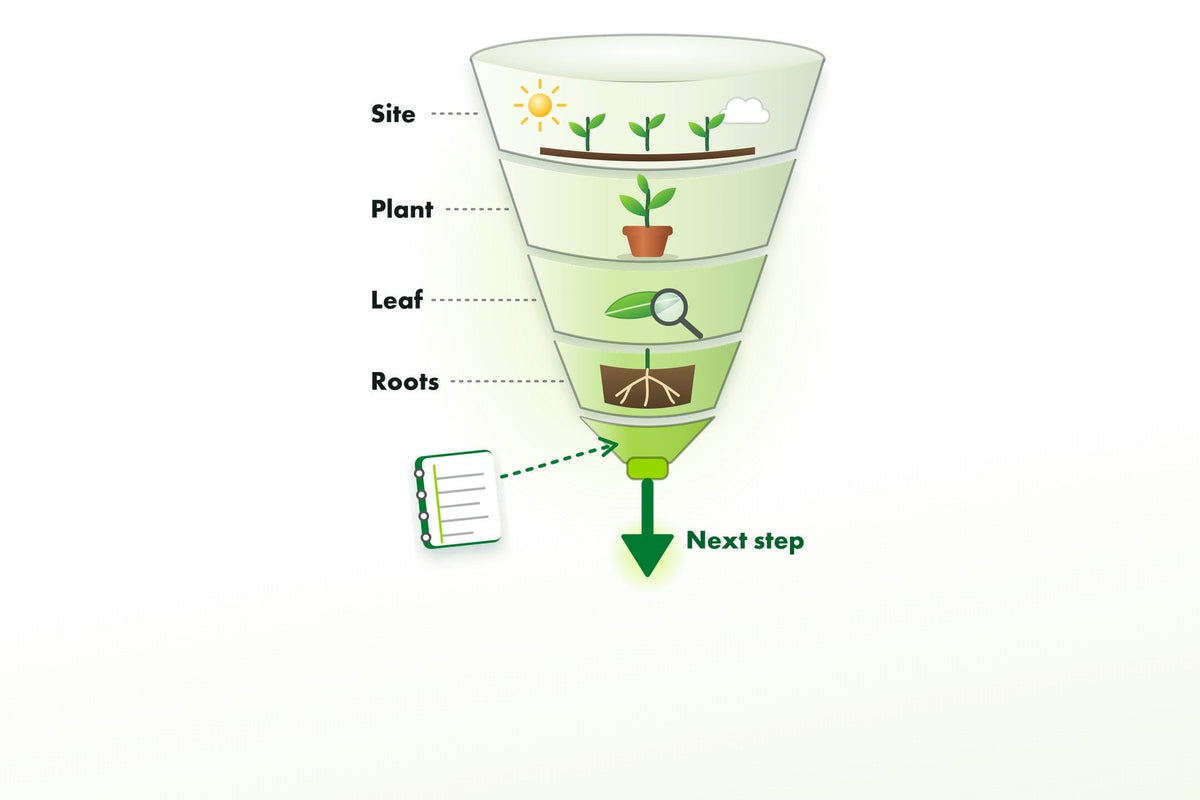
A funnel that narrows from site to plant to leaf to roots, with a notebook of the plant's history feeding in and an arrow leading out to the next step.

Reading your plant: symptoms, records and next steps
Describing what you see, keeping records and changing one thing at a time.

Read moreabout Reading your plant: symptoms, records and next steps

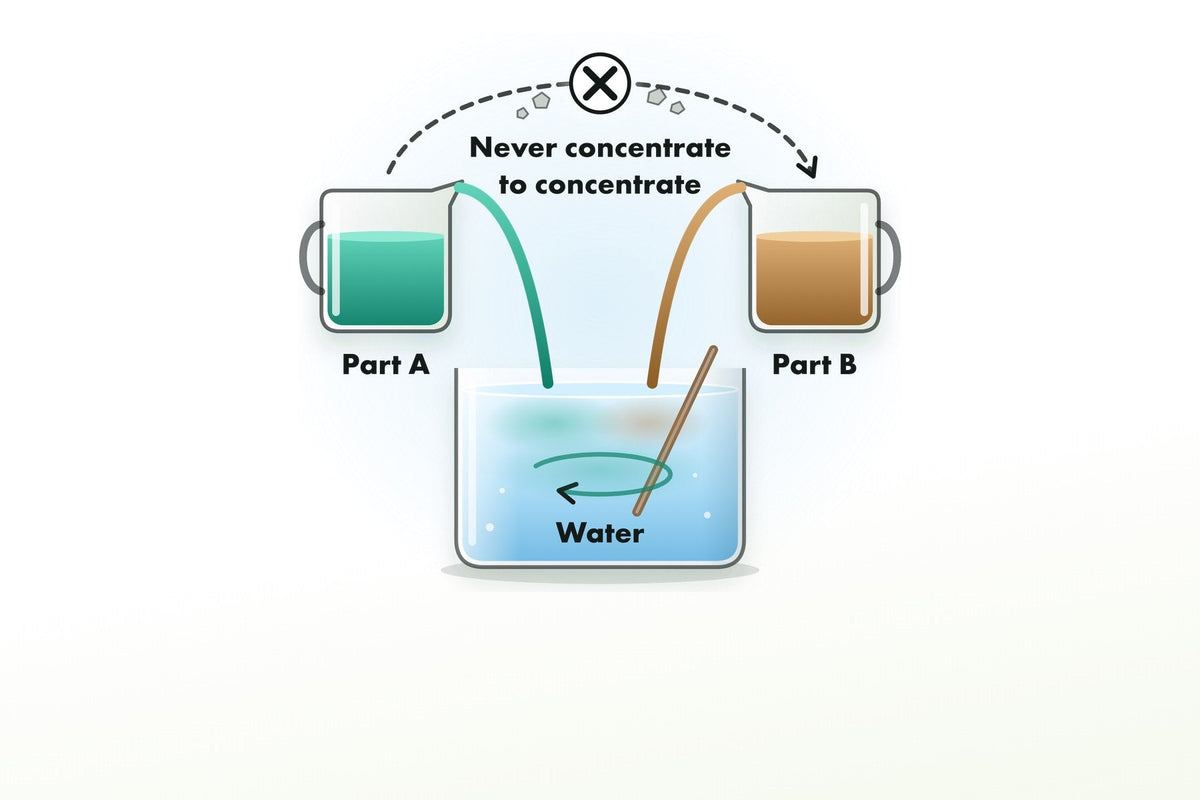
Mixing a two-part feed: Part A and Part B each pour from their own jug into a tank of water, and a crossed-out arrow warns never to pour one concentrate into the other.

Your first feeding plan (including organic versus synthetic)
Choosing and using fertilizer, including organic and synthetic.

Read moreabout Your first feeding plan (including organic versus synthetic)

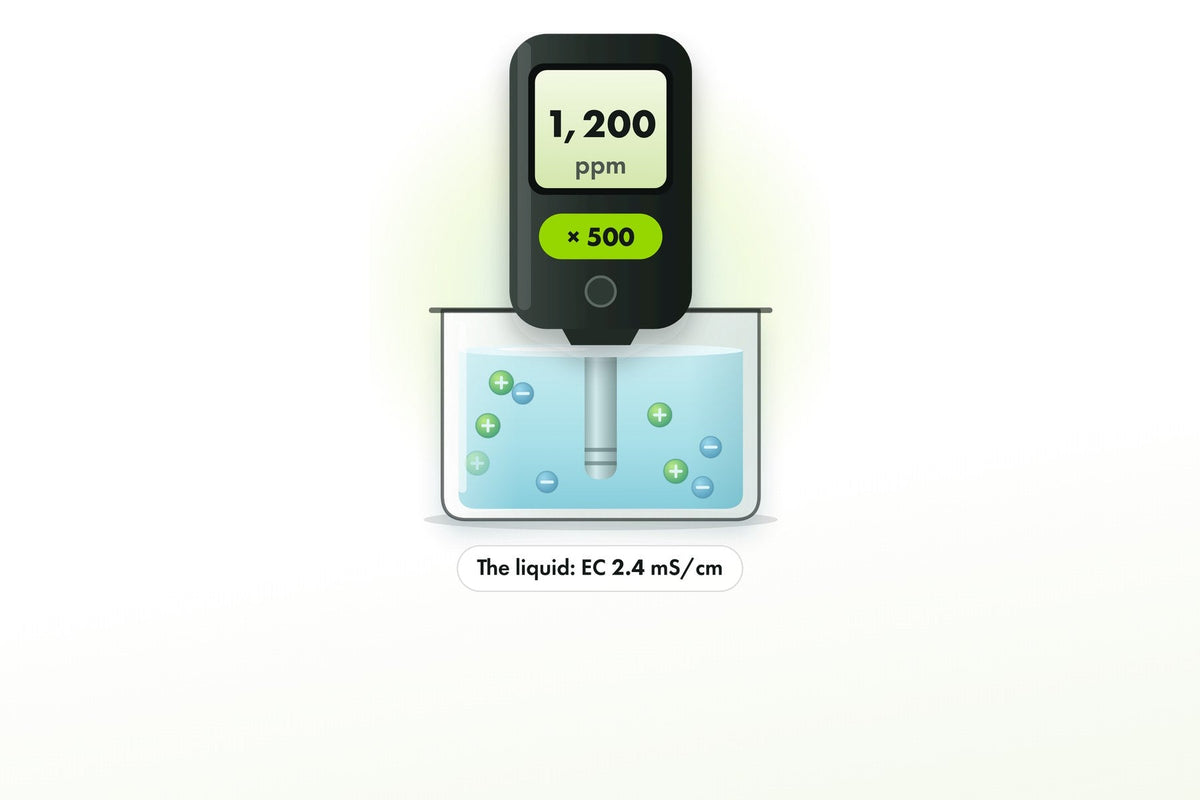
An EC meter dipped in a beaker of nutrient solution with charged ions, reading 1,200 ppm on the 500 scale for a liquid at EC 2.4 mS/cm.

EC and ppm, and how to use pH and EC meters

What an EC or ppm reading tells you, and how to keep your meters accurate.

Read moreabout EC and ppm, and how to use pH and EC meters

Acidity shown as dots: pH 7 is one dot, pH 6 is ten dots and pH 5 is a hundred dots, because each whole pH unit down is ten times more acidic.

pH: why it decides what roots can reach

How pH changes which nutrients roots can take up, and a starting range for your setup.

Read moreabout pH: why it decides what roots can reach
A potted plant with arrows showing mobile nutrients N, P, K and Mg moving from older leaves up to new growth, while Ca and Fe are hard to move and stay behind.

The essential nutrients: what each one does

The 17 elements plants need and what each one does.

Read moreabout The essential nutrients: what each one does

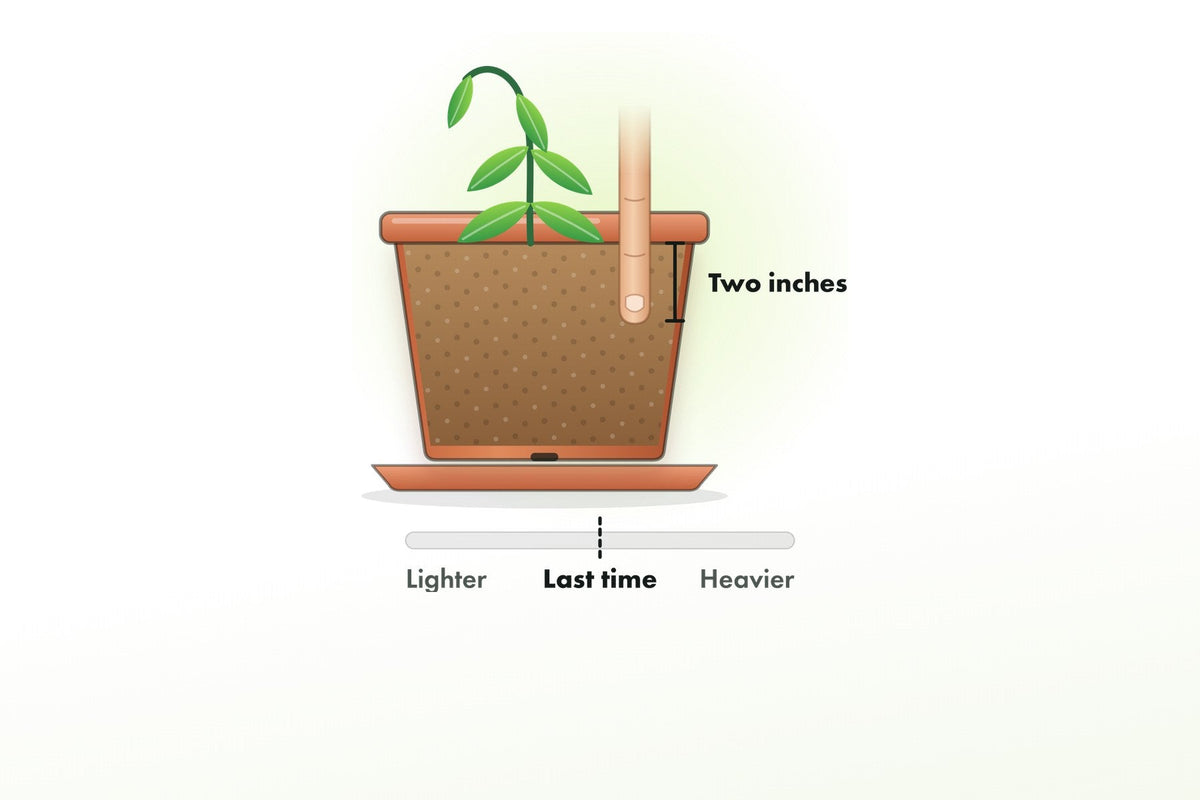
A pot cut in half to show the mix, with a finger pushed about two inches in to check moisture, a plant above it, a saucer below and a bar comparing the pot's weight with last time.

Watering: how to tell when a plant needs water and how much to give
How to check before you water, and how much to give.

Read moreabout Watering: how to tell when a plant needs water and how much to give

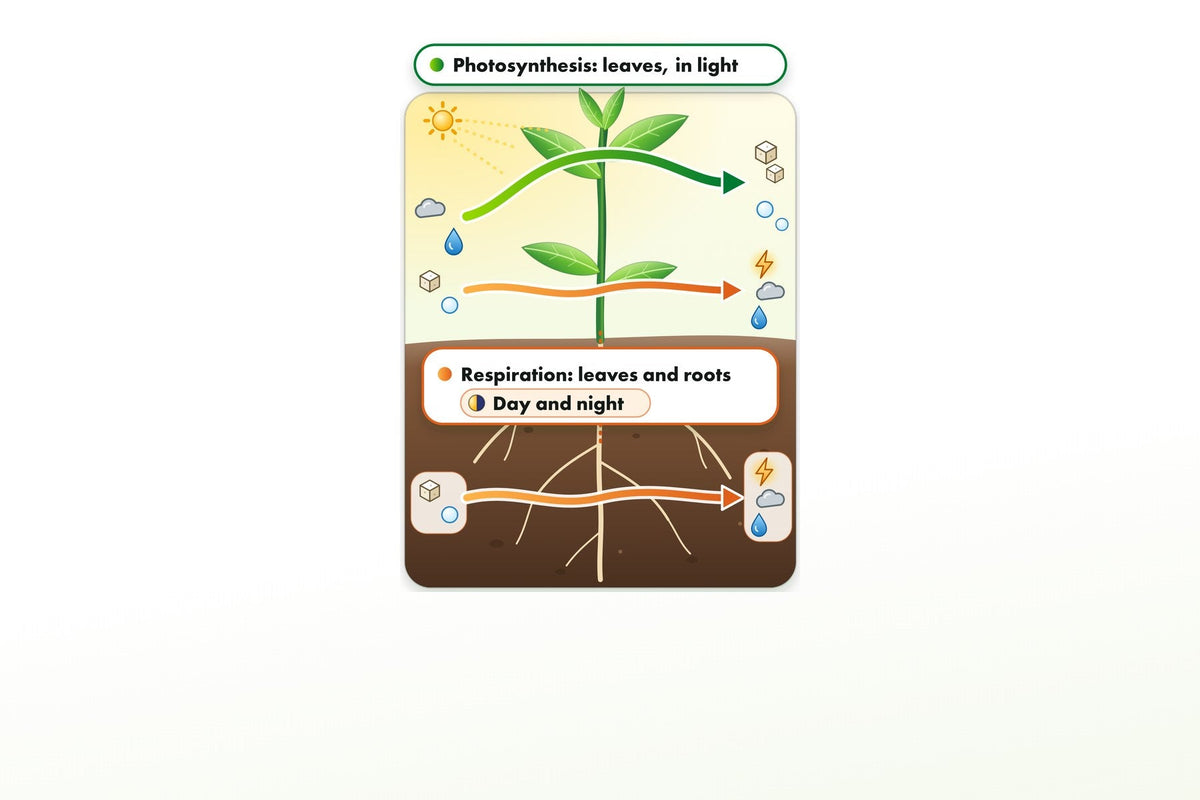
A plant drawn in cross-section with its leaves in light and its roots in soil, showing photosynthesis in the upper leaves and respiration in the leaves and roots day and night.

What every plant needs: plan your first grow
The short list of things every plant needs, and how to plan a first grow around them.

Read moreabout What every plant needs: plan your first grow

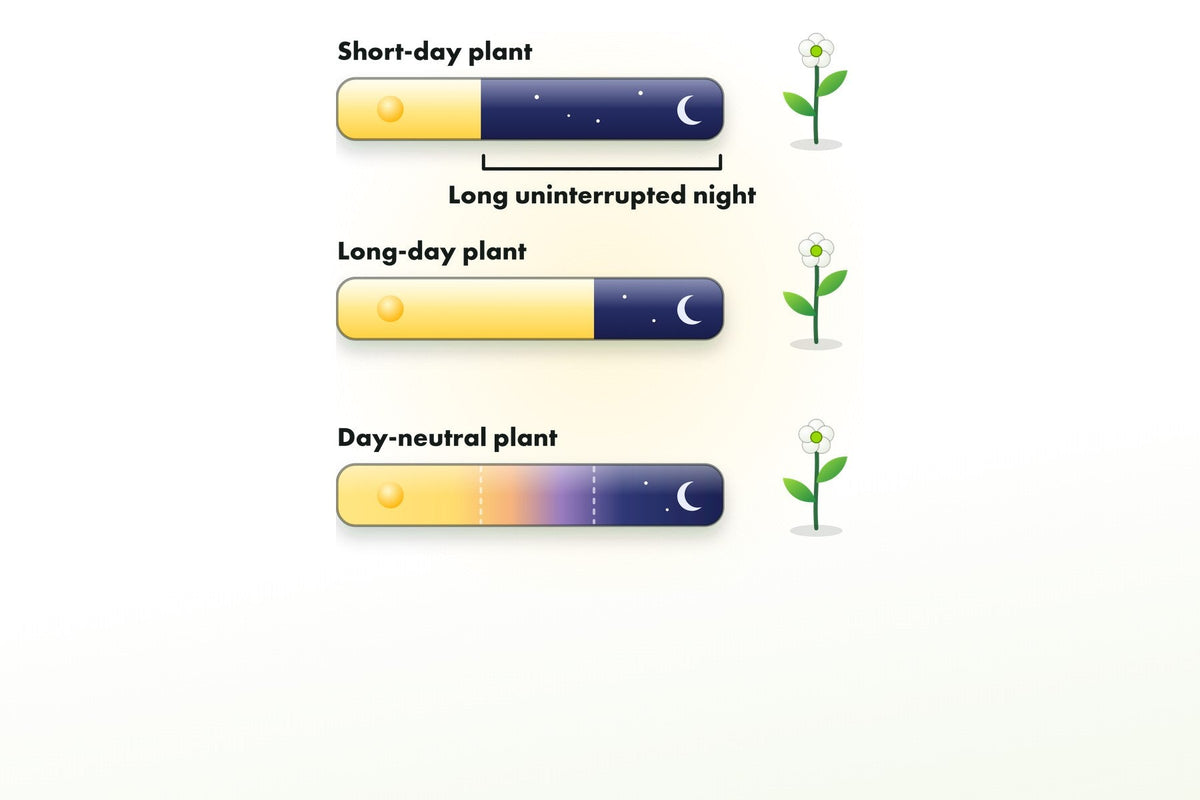
Three 24-hour day and night strips comparing a short-day plant, a long-day plant and a day-neutral plant, each ending in a flowering plant.

Light basics: intensity, daily light and day length

How bright, how long and how much light adds up over a day.

Read moreabout Light basics: intensity, daily light and day length

Sunlit greenhouse crop rows at golden hour

The grower's library

The rest of the library

Feed charts, the mixing order, a weekly foliar calendar and the full question list all sit on one page.