




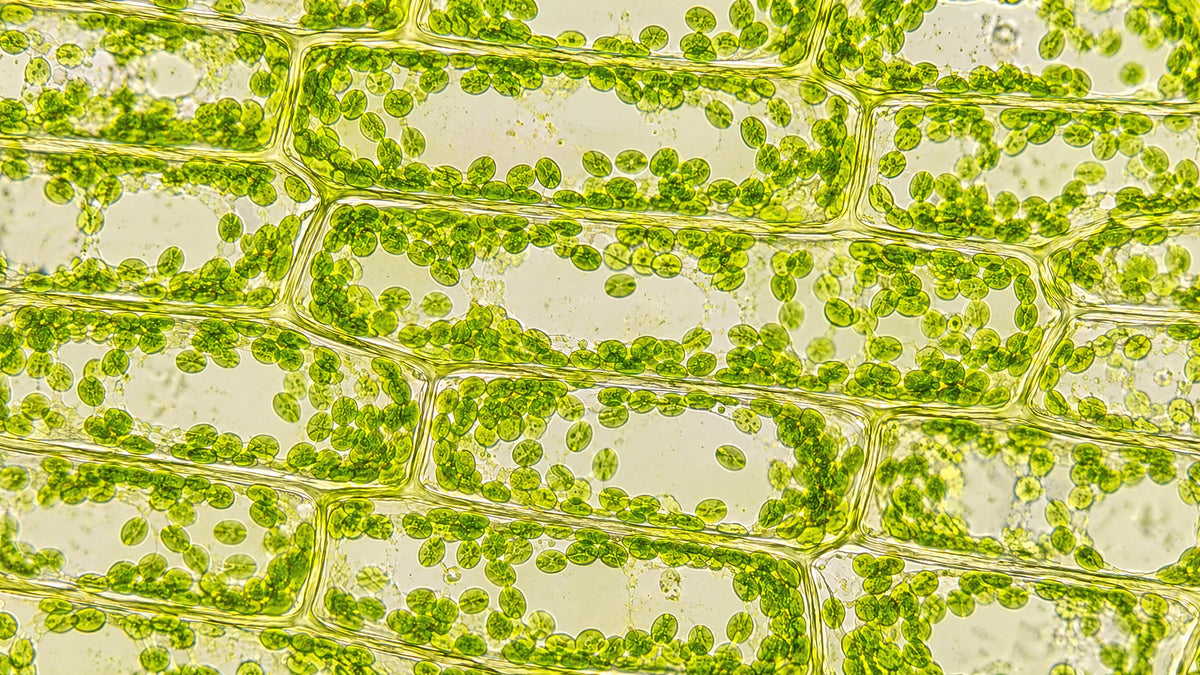

What carbon-based means
A carbon-based fertilizer supplies carbon as part of an organic molecule, an organic acid, a chelate, a compound built from fermented plant material, instead of as a bare mineral salt. The term describes chemistry, not a certification: it is not the same claim as organic, natural, or USDA certified, which a product can only make when its label and certifications back it up.
Why carbon is worth feeding
Carbon makes up roughly half of a plant's dry weight, and the compounds a grower actually grows for, the aroma, the flavor, the resin, the color, are some of the most carbon-dense things a plant makes. A plant builds these itself: it uses light to fix carbon from the air into sugars, then routes those sugars into everything from cell walls to pigment.
Minerals build the machinery that turns carbon into the crop.
Nitrogen, phosphorus, potassium, calcium, magnesium: every one of these matters, and most of the nitrogen a plant takes up ends up inside chlorophyll or Rubisco, the pigment and the enzyme a plant uses to capture carbon in the first place. NPK builds that machinery, and carbon, fixed from the air and routed through metabolism, is what the machinery turns into the crop. Growers already act on this outside the root zone, which is a large part of why a grow room runs supplemental CO2. A carbon-based fertilizer changes where some of that carbon can come from, rather than only through the air.
What functional carbon does in the root zone
Not all carbon plays the same role: bulk carbon is measured by how much of it is there, while functional carbon is chosen for the job its molecular shape allows. In a fertilizer, functional carbon usually shows up as a small organic acid, a citrate, an acetate, a fulvate, doing one of three jobs. It can hold a mineral inside a chelate, designed to keep it soluble rather than lock up in the soil. It can free minerals the soil has already bound, the same class of molecule roots release on their own to free bound phosphorus and iron. The smallest of them can be taken up directly and routed into the pathways a plant already uses to build itself, including the Krebs cycle nearly every living cell runs on. That is a different job than nitrogen or potassium does, which is why a carbon-based fertilizer sits alongside NPK rather than replacing it.
For mixing rates, feed charts, and more on how carbon fits into a full feed program, visit the Resources page, or ask GNOME, the on-site grow assistant, to build a feed chart for your setup.

Share:
How Feed Strength Moves Through a Grow Cycle
The carbon behind color, aroma and flavor