Did you know? A Primer A and Primer B story8 min readJump to the deep dive

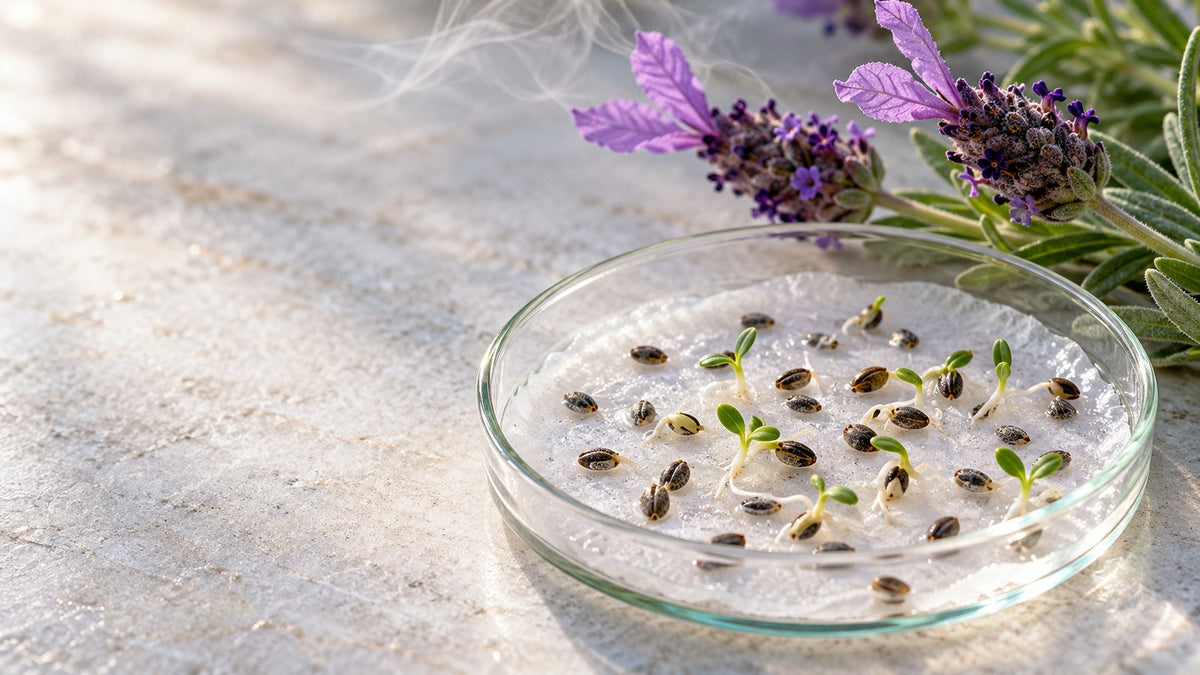
In a study published in 2010, researchers soaked seeds of a wild Mediterranean lavender, Lavandula stoechas, for a day in a solution made from smoke. At full strength, 100 percent of the treated seeds germinated, against 50 percent of the untreated seeds, and half of the treated seeds had germinated within about 4 days, against about 47 days for the untreated ones. Smoke from burning plants carries compounds that affect the germination of a wide variety of plants. This article explains how scientists found those compounds, what the lavender experiments showed and, in a Rooted Leaf deep dive, how a seed detects smoke and what a lavender flower spike is made of.

The first smoke experiment, in South Africa

At the University of Stellenbosch in South Africa, a graduate student named Hannes de Lange studied false heath, Audouinia capitata, a threatened shrub of the fynbos whose seeds were known to germinate in the wild only after fires. De Lange tested whether the smoke of a fire, rather than its heat, was what the seeds responded to.

He burned plant material in a barrel and blew the smoke through pipes, where it could cool, into nine tents, each covering a square of cleared ground. When he visited the site seven months later, he found dozens of false heath seedlings in the squares the tents had covered, and none in the ground around them. De Lange and his colleague Boucher published the result in the South African Journal of Botany in 1990: germination of the seeds was set off by one or more chemical factors in smoke from burning fynbos plants.

Finding the compound in smoke

Smoke is a mixture of thousands of compounds, so finding the active one took years. In Western Australia, a team led by Kingsley Dixon chose to work with smoke from burning cellulose, reasoning that a smoke signal that had evolved to trigger germination would come from a compound found in any fire that burns plants. The chemist Gavin Flematti and his colleagues at the University of Western Australia spent more than four years isolating the compound and working out its structure. In 2004 they reported it in Science: a small molecule of the type chemists call a butenolide, which had shown up as only a very small peak in their analysis of whole smoke, and which promoted germination at concentrations below one part per billion.

The compound and its relatives were later named karrikins, from karrik, the Noongar word for smoke. The first one identified, karrikin 1 or KAR1, has the chemical name 3-methyl-2H-furo[2,3-c]pyran-2-one, and the pyran ring in its structure is thought to come directly from sugars in the burning plant material.

Smoke is now a practical tool for some growers. A 2017 guide by Dixon for growers of Australian native plants describes soaking seed for 12 hours in a 10 percent solution of smoke water, and warns that commercial smoke water made from wood can strongly suppress germination.

The study in numbers

woody Mediterranean species tested in the 2010 study
30
of them germinated better after smoke
8
of Lavandula stoechas seeds germinated after full-strength smoke solution, against 50% untreated
100%
for half the smoke-treated lavender seeds to germinate, against about 47 days untreated
4days

The lavender experiment

Moreira and colleagues tested whether heat and smoke, the main germination cues a fire leaves behind, affected the seeds of 30 woody plants of the Mediterranean Basin, from seven plant families. The seeds were collected in 2007 from wild plants in fire-prone areas of southeastern Spain, and they included Lavandula stoechas, a lavender whose flower spikes are topped by mauve sterile bracts 1 to 2 cm long.

For the smoke test, the team ground dried leaves and thin twigs of the oak Quercus coccifera, heated them in an oven for 30 minutes at 198 °C, and made a smoke solution, which they used at full strength and diluted one part in ten. Seeds soaked in a solution, or in plain water as a control, for 24 hours. They were then sown on agar in Petri dishes and kept at 20 °C in the dark, and the researchers counted the germinated seeds for two months.

Of the untreated lavender seeds, 50 percent germinated. With the full-strength smoke solution, 100 percent did, and with the diluted solution, 96 percent. Smoke also changed the timing: half of the untreated seeds took about 47 days to germinate, and half of the smoke-treated seeds took 4 to 5 days. Seedlings from treated and untreated seeds grew to a similar length. Across the whole study, smoke increased germination in 8 of the 30 species.

Lavandula stoechas seeds that germinated, smoke test

Untreated, soaked in water

50%

Smoke solution diluted one in ten

96%

Smoke solution at full strength

100%

Seeds soaked for 24 hours, then kept at 20 °C in the dark for two months. Moreira and colleagues, Annals of Botany, 2010.

Heat gave a different result

The same study tested heat separately, heating seeds in an oven at temperatures chosen to match the top layer of soil during a fire. In that experiment, 10 percent of the untreated lavender seeds germinated. After 10 minutes at 100 °C, 68 percent did, and after 5 minutes at 120 °C, 72 percent. Ten minutes at 120 °C gave 12 percent, not significantly different from untreated seeds, and after 5 minutes at 150 °C no seeds germinated.

The heat and smoke experiments were each measured against their own untreated seeds, which germinated at 10 percent in the heat test and 50 percent in the smoke test, so the two sets of numbers are not directly comparable.

Lavandula stoechas seeds that germinated after heating

Untreated

10%

80 °C for 5 minutes

21%

80 °C for 10 minutes

31%

100 °C for 5 minutes

41%

100 °C for 10 minutes

68%

120 °C for 5 minutes

72%

120 °C for 10 minutes

12%

150 °C for 5 minutes

0%

The heat test had its own untreated seeds, which germinated at 10%. Moreira and colleagues, Annals of Botany, 2010.

Smoke and seeds, 1990 to 2014

  1. 1990

    False heath

    De Lange and Boucher show that smoke from burning fynbos plants sets off germination of false heath seeds.

  2. 2004

    The compound

    Flematti and colleagues report a butenolide from smoke that promotes germination below one part per billion.

  3. 2010

    Lavender

    Moreira and colleagues find that smoke raises Lavandula stoechas germination from 50% to 100%.

  4. 2012

    No effect

    A study in Turkey finds that smoke solutions do not significantly increase Lavandula stoechas germination.

  5. 2014

    Lamiaceae

    Six of seven eastern Mediterranean plants in the lavender family, Lamiaceae, germinate better after smoke, Lavandula stoechas at all three dilutions.

Other experiments, other results

Smoke does not have the same effect on every collection of lavender seed. In a 2012 study in the Turkish Journal of Botany, Şükrü Serter Çatav and colleagues treated seeds of five eastern Mediterranean woody species, Lavandula stoechas among them, with smoke solutions made from several different plants. None of the solutions significantly increased the lavender's germination.

In 2014, Çatav and colleagues reported a larger test on the plant family Lamiaceae, to which lavender belongs, in Seed Science Research. They applied smoke solutions at three dilutions, one to one, one to ten and one to one hundred, to seven eastern Mediterranean plants. Six germinated significantly better than untreated seeds after at least one treatment, and Lavandula stoechas responded to all three dilutions. The authors concluded that smoke is an important germination cue for the family. The studies used different seed collections and different smoke solutions, and their results for the same species differ.

Rooted Leaf Deep Dive

How a seed detects smoke

Rooted Leaf Deep Dive: how a seed detects smoke

Karrikins act in very small amounts: in laboratory tests they keep their activity at concentrations often below one billionth of a mole per liter. Research on the laboratory plant Arabidopsis identified a gene that seeds need in order to respond to them, KARRIKIN INSENSITIVE 2, or KAI2, and its protein is described as a receptor for karrikins.

Plants without a working KAI2 gene show changes in their development, so researchers think KAI2 also detects a molecule the plant makes itself, provisionally called the KAI2 ligand. There is also circumstantial evidence that a karrikin may have to be chemically changed inside the plant before KAI2 can detect it. Many details are still being worked out. What the experiments establish is that smoke from burning plants contains karrikins, and that seeds of a number of species, including Lavandula stoechas in the 2010 and 2014 experiments, germinate more often or sooner after exposure to smoke.

What a seed detects in smoke

Schematic: a fire of burning plant material sends up smoke that carries specks of many compounds, among them a few karrikins. Karrikins travel down to a seed, cut open to show its embryo, where two of them sit in the marks for KAI2, the protein described as their receptor. The seed sends out a root and a shoot with two seed leaves.
  • Fire burning plant material
  • Smoke, a mixture of thousands of compounds
  • Karrikins, small molecules found in the smoke of burning plants
  • KAI2, a protein described as a receptor for karrikins, which seeds need in order to respond to them
  • Germination: in some species, more seeds germinate after smoke, and sooner
Schematic, not to scale, and the seed is a generic seed. KAI2 was identified in the laboratory plant Arabidopsis, there is circumstantial evidence that a karrikin may have to be chemically changed inside the plant before KAI2 can detect it, and many details are still being worked out.

From a fire to a seedling

  1. Burning plants

    Smoke from burning plant material, and from burning cellulose, contains karrikins.

  2. Karrikins

    Small molecules that keep their activity below one billionth of a mole per liter.

  3. KAI2

    In Arabidopsis, seeds need the KAI2 gene to respond to karrikins.

  4. Germination

    In some species, Lavandula stoechas in the 2010 and 2014 experiments among them, more seeds germinate, and sooner.

Inside a lavender flower spike

Lavender belongs to the plant family Lamiaceae. Its flowers grow in tiered clusters of 2 to 10 along a spike at the end of each stem. Each flower sits in a calyx, a small five-lobed tube that stays in place after flowering, and each flower can form up to four nutlets, small fruits. In Lavandula stoechas the nutlets are about 2 mm long and become mucilaginous, coated in a slippery gel, when wet.

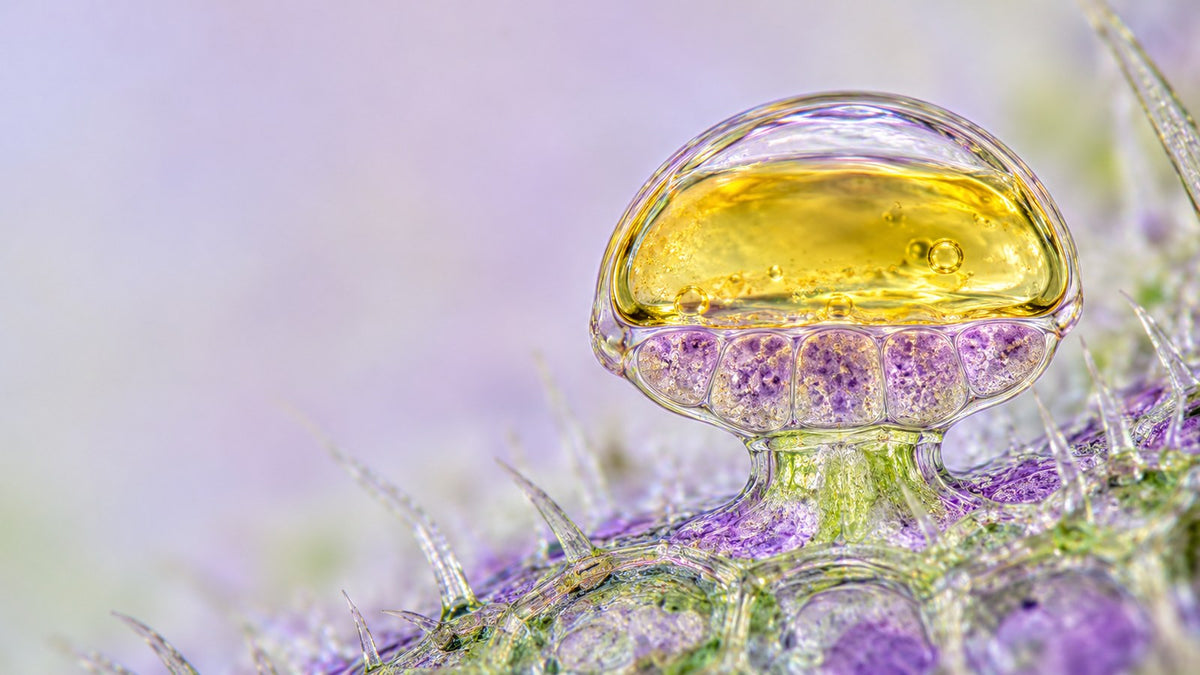
Lavender's scent is made by glandular trichomes, microscopic structures on the surface of its leaves and flowers. A 2023 study of lavender found three kinds of trichome on the leaves: peltate glandular trichomes, capitate glandular trichomes and non-glandular hairs. The peltate type, which also grows on the sepals that form the calyx, has eight secretory cells arranged in a ring, and the oil they make collects in a cavity under the trichome's outer layer, the cuticle. The petals carry only the capitate type. In that study, linalyl acetate and linalool were the most prominent scent compounds in the flowers, and the flowers were the main site where those compounds accumulated.

Tap a number to explore the plant.
  1. The flower spike

    Flowers in tiered clusters of 2 to 10 at the end of the stem. In lavender the flowers are the main site of linalool and linalyl acetate.

  2. The calyx

    A small five-lobed tube around each flower that stays in place after flowering. Its peltate glandular trichomes make and store oil. Each flower can form up to four nutlets.

  3. The leaves

    Narrow leaves whose surface carries peltate and capitate glandular trichomes and non-glandular hairs.

Lavender and Primer A and B

A lavender spike is full of small details we love: the tiers of flowers, the persistent calyces and the tiny glands that hold its scent. We ferment Lavandula angustifolia with juniper (Juniperus communis) for the botanical matrix in Primer A and Primer B.

The smoke experiments tested Lavandula stoechas seeds. The lavender we ferment for our Primers is Lavandula angustifolia.

Shop Primer A
Primer A
Primer A
From $9.97
Primer B
Primer B
From $9.97

In a study published in 2010, researchers soaked seeds of a wild Mediterranean lavender, Lavandula stoechas, for a day in a solution made from smoke. At full strength, 100 percent of the treated seeds germinated, against 50 percent of the untreated seeds, and half of the treated seeds had germinated within about 4 days, against about 47 days for the untreated ones. Smoke from burning plants carries compounds that affect the germination of a wide variety of plants. This article explains how scientists found those compounds, what the lavender experiments showed and, in a Rooted Leaf deep dive, how a seed detects smoke and what a lavender flower spike is made of.

The first smoke experiment, in South Africa

At the University of Stellenbosch in South Africa, a graduate student named Hannes de Lange studied false heath, Audouinia capitata, a threatened shrub of the fynbos whose seeds were known to germinate in the wild only after fires. De Lange tested whether the smoke of a fire, rather than its heat, was what the seeds responded to.

He burned plant material in a barrel and blew the smoke through pipes, where it could cool, into nine tents, each covering a square of cleared ground. When he visited the site seven months later, he found dozens of false heath seedlings in the squares the tents had covered, and none in the ground around them. De Lange and his colleague Boucher published the result in the South African Journal of Botany in 1990: germination of the seeds was set off by one or more chemical factors in smoke from burning fynbos plants.

Finding the compound in smoke

Smoke is a mixture of thousands of compounds, so finding the active one took years. In Western Australia, a team led by Kingsley Dixon chose to work with smoke from burning cellulose, reasoning that a smoke signal that had evolved to trigger germination would come from a compound found in any fire that burns plants. The chemist Gavin Flematti and his colleagues at the University of Western Australia spent more than four years isolating the compound and working out its structure. In 2004 they reported it in Science: a small molecule of the type chemists call a butenolide, which had shown up as only a very small peak in their analysis of whole smoke, and which promoted germination at concentrations below one part per billion.

The compound and its relatives were later named karrikins, from karrik, the Noongar word for smoke. The first one identified, karrikin 1 or KAR1, has the chemical name 3-methyl-2H-furo[2,3-c]pyran-2-one, and the pyran ring in its structure is thought to come directly from sugars in the burning plant material.

Smoke is now a practical tool for some growers. A 2017 guide by Dixon for growers of Australian native plants describes soaking seed for 12 hours in a 10 percent solution of smoke water, and warns that commercial smoke water made from wood can strongly suppress germination.

The lavender experiment

Moreira and colleagues tested whether heat and smoke, the main germination cues a fire leaves behind, affected the seeds of 30 woody plants of the Mediterranean Basin, from seven plant families. The seeds were collected in 2007 from wild plants in fire-prone areas of southeastern Spain, and they included Lavandula stoechas, a lavender whose flower spikes are topped by mauve sterile bracts 1 to 2 cm long.

For the smoke test, the team ground dried leaves and thin twigs of the oak Quercus coccifera, heated them in an oven for 30 minutes at 198 °C, and made a smoke solution, which they used at full strength and diluted one part in ten. Seeds soaked in a solution, or in plain water as a control, for 24 hours. They were then sown on agar in Petri dishes and kept at 20 °C in the dark, and the researchers counted the germinated seeds for two months.

Of the untreated lavender seeds, 50 percent germinated. With the full-strength smoke solution, 100 percent did, and with the diluted solution, 96 percent. Smoke also changed the timing: half of the untreated seeds took about 47 days to germinate, and half of the smoke-treated seeds took 4 to 5 days. Seedlings from treated and untreated seeds grew to a similar length. Across the whole study, smoke increased germination in 8 of the 30 species.

Heat gave a different result

The same study tested heat separately, heating seeds in an oven at temperatures chosen to match the top layer of soil during a fire. In that experiment, 10 percent of the untreated lavender seeds germinated. After 10 minutes at 100 °C, 68 percent did, and after 5 minutes at 120 °C, 72 percent. Ten minutes at 120 °C gave 12 percent, not significantly different from untreated seeds, and after 5 minutes at 150 °C no seeds germinated.

The heat and smoke experiments were each measured against their own untreated seeds, which germinated at 10 percent in the heat test and 50 percent in the smoke test, so the two sets of numbers are not directly comparable.

Other experiments, other results

Smoke does not have the same effect on every collection of lavender seed. In a 2012 study in the Turkish Journal of Botany, Şükrü Serter Çatav and colleagues treated seeds of five eastern Mediterranean woody species, Lavandula stoechas among them, with smoke solutions made from several different plants. None of the solutions significantly increased the lavender's germination.

In 2014, Çatav and colleagues reported a larger test on the plant family Lamiaceae, to which lavender belongs, in Seed Science Research. They applied smoke solutions at three dilutions, one to one, one to ten and one to one hundred, to seven eastern Mediterranean plants. Six germinated significantly better than untreated seeds after at least one treatment, and Lavandula stoechas responded to all three dilutions. The authors concluded that smoke is an important germination cue for the family. The studies used different seed collections and different smoke solutions, and their results for the same species differ.

Rooted Leaf Deep Dive: how a seed detects smoke

Karrikins act in very small amounts: in laboratory tests they keep their activity at concentrations often below one billionth of a mole per liter. Research on the laboratory plant Arabidopsis identified a gene that seeds need in order to respond to them, KARRIKIN INSENSITIVE 2, or KAI2, and its protein is described as a receptor for karrikins.

Plants without a working KAI2 gene show changes in their development, so researchers think KAI2 also detects a molecule the plant makes itself, provisionally called the KAI2 ligand. There is also circumstantial evidence that a karrikin may have to be chemically changed inside the plant before KAI2 can detect it. Many details are still being worked out. What the experiments establish is that smoke from burning plants contains karrikins, and that seeds of a number of species, including Lavandula stoechas in the 2010 and 2014 experiments, germinate more often or sooner after exposure to smoke.

Inside a lavender flower spike

Lavender belongs to the plant family Lamiaceae. Its flowers grow in tiered clusters of 2 to 10 along a spike at the end of each stem. Each flower sits in a calyx, a small five-lobed tube that stays in place after flowering, and each flower can form up to four nutlets, small fruits. In Lavandula stoechas the nutlets are about 2 mm long and become mucilaginous, coated in a slippery gel, when wet.

Lavender's scent is made by glandular trichomes, microscopic structures on the surface of its leaves and flowers. A 2023 study of lavender found three kinds of trichome on the leaves: peltate glandular trichomes, capitate glandular trichomes and non-glandular hairs. The peltate type, which also grows on the sepals that form the calyx, has eight secretory cells arranged in a ring, and the oil they make collects in a cavity under the trichome's outer layer, the cuticle. The petals carry only the capitate type. In that study, linalyl acetate and linalool were the most prominent scent compounds in the flowers, and the flowers were the main site where those compounds accumulated.

Lavender and Primer A and B

A lavender spike is full of small details we love: the tiers of flowers, the persistent calyces and the tiny glands that hold its scent. We ferment Lavandula angustifolia with juniper (Juniperus communis) for the botanical matrix in Primer A and Primer B.

The smoke experiments tested Lavandula stoechas seeds. The lavender we ferment for our Primers is Lavandula angustifolia.

Sources

Moreira, B., Tormo, J., Estrelles, E., and Pausas, J. G. Disentangling the role of heat and smoke as germination cues in Mediterranean Basin flora. Annals of Botany 105 (2010): 627 to 635. Read the paper

Çatav, Ş. S., Küçükakyüz, K., Akbaş, K., and Tavşanoğlu, Ç. Smoke-enhanced seed germination in Mediterranean Lamiaceae. Seed Science Research 24 (2014): 257 to 264. Read the paper

Çatav, Ş. S., and colleagues. Germination response of five eastern Mediterranean woody species to smoke solutions derived from various plants. Turkish Journal of Botany 36 (2012): 480 to 487. Read the paper

Flematti, G. R., Ghisalberti, E. L., Dixon, K. W., and Trengove, R. D. A compound from smoke that promotes seed germination. Science 305 (2004): 977. Read the abstract

The false heath experiment: Susan Milius, Smokey the Gardener, Science News, 2004. De Lange, J. H., and Boucher, C. Autecological studies on Audouinia capitata (Bruniaceae). I. Plant-derived smoke as a seed germination cue. South African Journal of Botany 56 (1990), as cited by the Australian Native Plants Society, which also carries Kingsley Dixon's 2017 guide to smoke germination.

Karrikins: the University of Western Australia on the name karrikin (2010); Hrdlička and colleagues on karrikins in smoke water, Plant Methods (2019); Varshney and Gutjahr on the KAI2 receptor, Plant and Cell Physiology (2023).

The lavender plant: Zhang and colleagues on lavender's glandular trichomes, BMC Plant Biology (2023); the genus Lavandula, Florabase; the lavender calyx, ColPlanta; Lavandula stoechas, Flora of New Zealand.
Back to Primer A and Primer B

Leave a comment

Please note, comments need to be approved before they are published.

This site is protected by hCaptcha and the hCaptcha Privacy Policy and Terms of Service apply.

Keep reading

View all

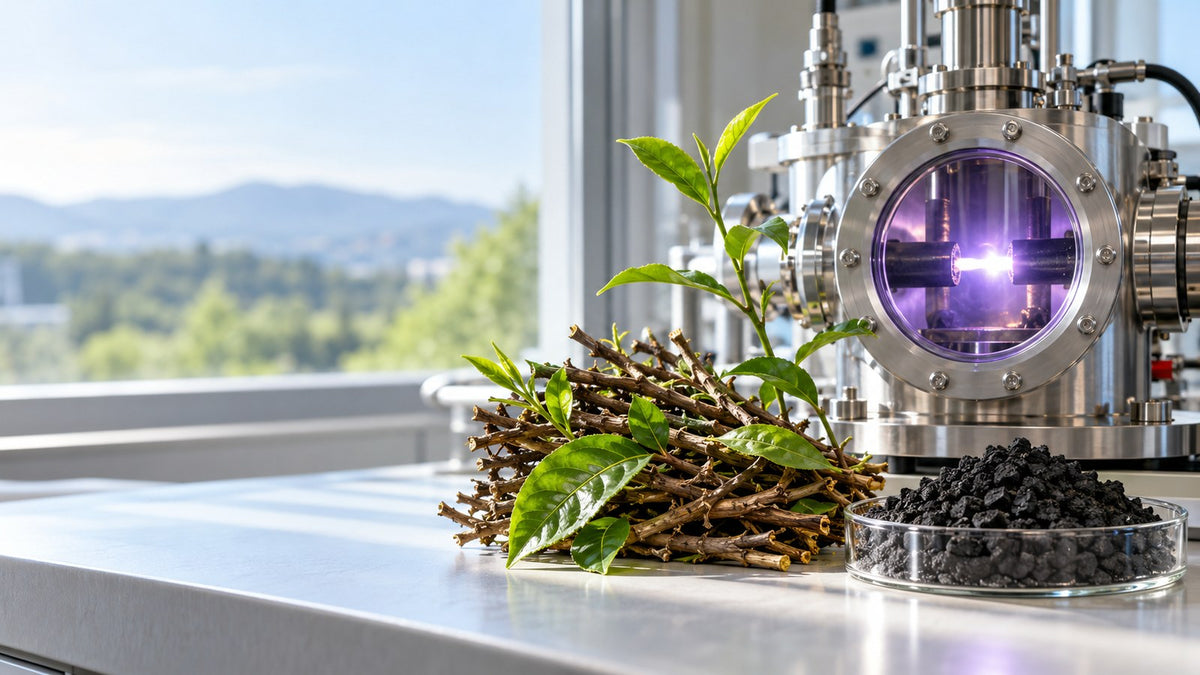
Fresh tea leaves and a bundle of pruned tea twigs on a laboratory bench beside an arc-plasma chamber glowing violet, with a glass dish of black activated carbon granules

Tea's Plasma Plot Twist

Researchers used arc plasma to make a carbon-dioxide adsorbent from tea-twig waste. This article explains how the carbon was made and describes the microscopic surfaces inside it.

Read moreabout Tea's Plasma Plot Twist

A magnified lavender oil gland on the calyx surface: a golden pool of oil held under a clear cuticle dome, above a row of secretory cells on a short stalk

Lavender's Hidden Laboratories

Microscopic lavender glands make aromatic compounds and store oil above their secretory cells. Follow the research from flower anatomy and scent-making enzymes to a standardized oral lavender-oil preparation studied in a human trial.

Read moreabout Lavender's Hidden Laboratories

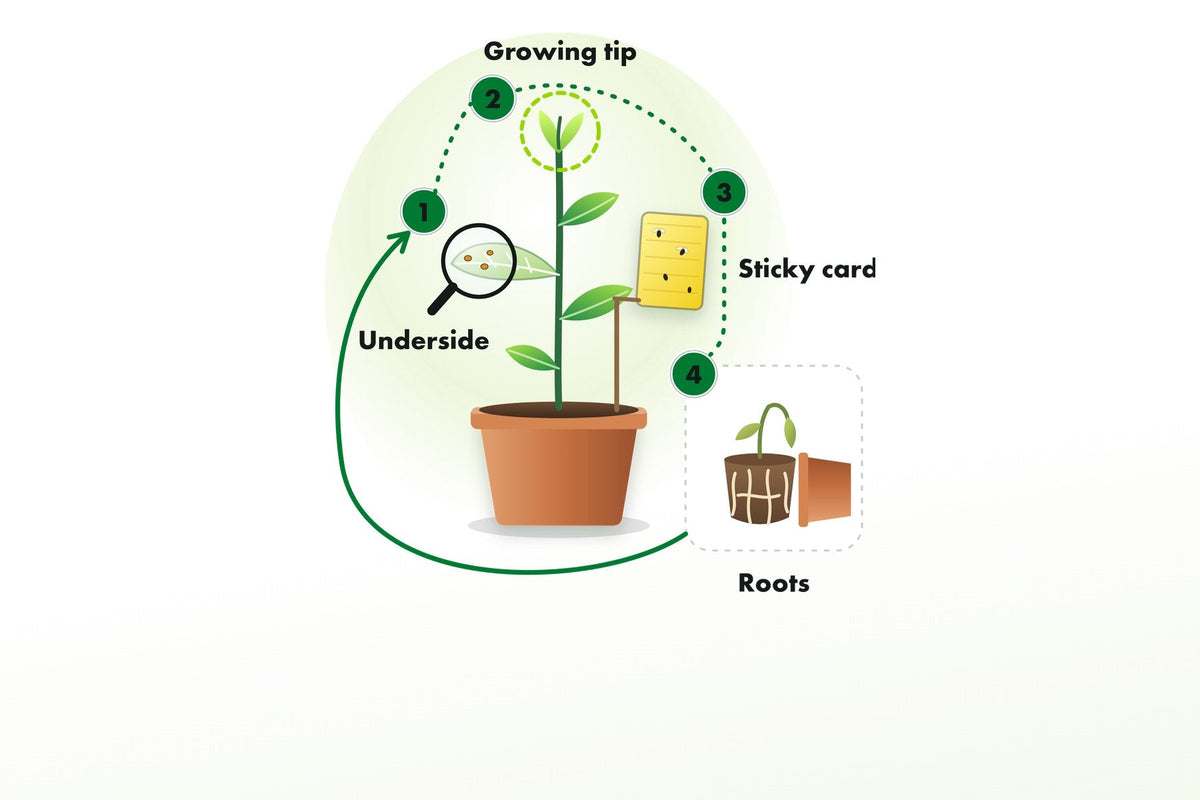
A scouting circuit around a potted plant with four numbered checks: leaf undersides under a hand lens, the growing tip, a yellow sticky card and the roots.

Common pests and diseases: prevention and first response

Preventing problems, scouting for them and responding gently first.

Read moreabout Common pests and diseases: prevention and first response